Archivi tag: smalto

La Nail art durante i vari decenni: dagli anni '20 ai nostri giorni

Bentornati su un nuovo articolo!

Oggi voglio parlarvi delle varie nail art e mode che abbiamo visto durante i decenni, dalla nascita di smalti e prodotti per ricostruzione fino ai giorni nostri.

Iniziamo!

Anni 20

Durante questa decade fu inventato un prodotto che serviva a lucidare le unghie naturali.

Bastava strofinare questa polverina sull’unghia con un pezzo di pelle di daino sull’unghia.

Anche gli smalti colorati iniziavano a fare la loro apparsa, e la nail art più comune in questi anni ruggenti era quella a mezzaluna, o Moon Manicure.

Basta ricoprire tutta l’unghia con il colore desiderato, lasciando scoperto solamente un punto, ovvero quello dove si trova la lunula dell’unghia.

Anni 30

Durante questi anni iniziano a nascere parecchie case cosmetiche che sono arrivate fino ad oggi.

La loro produzione si concentrava dunque su smalti colorati e makeup.

Andava di moda abbinare il rossetto al colore delle unghie.

Gli smalti con formula opaca iniziavano a farsi strada e le prime unghie finte furono inventate.

Come nail art troviamo le unghie con una forma a mandorla, con una linea sottile sul margine libero, creata con l’argento.

Anni 40

Durante questa decade si vedono due tipi di nail art.

Le attrici del grande cinema portavano sulle loro scene unghie abbastanza lunghe rosse e a mandorla.

Invece le lavoratrici comuni per comodità preferivano mantenere le unghie corte e con colori naturali.

Anni 50

Da questo periodo in poi si ha una svolta nel mondo delle unghie.

Viene formulato l’acrilico e inventate le tip, in modo da poter eseguire allungamenti delle unghie naturali.

Come tendenza nail art invece si rimane sempre sull’unghia a mandorla e ovale, con colori rosso-arancionati.

Anni 60

La ricostruzione unghie ha sempre più successo e molte donne desiderano curare le proprie unghie.

Si fanno largo i colori perlati e shimmer, e le unghie iniziano ad avere una forma più squadrata, per avere qualcosa diverso dal solito.

Anni 70

Durante questi anni vengono progettati i primi prodotti fotoindurenti ma bisognerà aspettare fino agli anni 90 per la nascita dei gel.

Nasce la famosissima french manicure.

Quest’unghia dal colore rosato con il bianco sul margine libero risulta molto versatile e adatto a tutti i tipi di look.

Anni 80

Questi sono gli anni più colorati ed eccentrici per quanto riguarda la moda, e anche le unghie seguono questo esempio.

La forma prediletta è lo squoval, un mix tra quadrata e ovale e ovviamente i colori più usati sono quelli vivaci, fluo e accesi.

Le cantanti pop del momento erano di ispirazione con i loro look super vistosi.

Inoltre inventano le unghie Press on, ovvero unghie finte già decorate da applicare con una colla adesiva.

Anni 90

Ci stiamo avvicinando sempre di più ai nostri tempi.

Come ho detto prima è durante questi anni che si avrà un completamento della formula del gel, e quindi sarà rilasciato sul mercato.

Per le nail art ci sono due tendenze prevalenti.

Le più semplici sono unghie corte e con colori scuri.

Invece le più estreme sono ricostruite con le tip, molto lunghe, tanto che tendono a curvare verso il basso, con decorazioni estrose.

Anni 2000

Le decorazioni sulle unghie iniziano ad essere varie, come foil, adesivi, smalti con formulazioni particolari.

Si seguiva molto lo stile hip hop, e le unghie stavano diventando un modo per poter esprimere se stessi.

Oggi

Oggi abbiamo davvero una vasta scelta di prodotti e colori da scegliere.

Anche in questo caso le tendenze sono due.

Abbiamo le unghie da salone, quindi molto semplici, con una lunghezza naturale che non stufano mai e si abbinano alla vita di tutti i giorni.

Il french si è trasformato e invece di essere così definito, è diventato una sfumatura, prendendo il nome di baby boomer.

Dall’altra parte abbiamo anche unghie dalla lunghezza e dalla forma estrema, con decorazioni molto elaborate e sofisticate.

Eccoci arrivati alla fine di questo articolo.

Voglio specificare che nessuna foto in questo articolo mi appartiene.

Spero sia stato interessante sapere la storia del mondo delle unghie.

Se questo articolo vi è piaciuto lasciate like e condividete.

Non dimenticate di seguirmi su Instagram e sul mio canale Youtube.

Alla prossima!

SOFIA

Nail art during the various decades: from the 1920s to the present day

Welcome back to a new article!

Today I want to talk to you about the various nail art and fashions that we have seen over the decades, from the birth of nail polishes and reconstruction products to the present day.

Let’s start!

20s

During this decade a product was invented that was used to polish natural nails.

You had to rub this powder on the nail with a piece of buckskin on the nail.

Colored nail polishes were also starting to appear, and the most common nail art in these roaring years was the Moon Manicure.

Just cover the entire nail with the desired color, leaving only one point uncovered, that is, the one where the lunula of the nail is located.

30s

During these years several cosmetic houses have started to emerge which have survived until today.

Their production therefore focused on colored nail polishes and makeup.

It was fashionable to combine lipstick with the color of the nails.

The varnishes with opaque formula began to make their way and the first false nails were invented.

As nail art we find the nails with an almond shape, with a thin line on the free edge, created with silver.

40s

During this decade two types of nail art are seen.

The actresses of the great cinema wore pretty long red and almond nails on their scenes.

Instead the common workers for convenience preferred to keep their nails short and with natural colors.

50s

From this period onwards there is a turning point in the world of nails.

Acrylic is formulated and the tips are invented, so that natural nail extensions can be performed.

As a nail art trend instead, you always stay on the almond and oval nail, with red-orange colors.

60s

Nail reconstruction is increasingly successful and many women want to take care of their nails.

Pearlescent and shimmer colors make their way, and the nails begin to have a more square shape, to have something different than usual.

70s

During these years the first light-curing products are designed but it will be necessary to wait until the 90s for the birth of the gels.

The famous French manicure is born.

This pinkish nail with white on the free edge is very versatile and suitable for all types of looks.

80s

These are the most colorful and eccentric years in terms of fashion, and nails also follow this example.

The favorite shape is the squoval, a mix between square and oval and obviously the most used colors are bright and fluorescent .

The pop singers of the moment were inspirational with their super flashy looks.

They also invent Press on nails, which are already decorated fake nails to be applied with an adhesive glue.

90’s

We are getting closer to our times.

As I said before, it is during these years that there will be a completion of the gel formula, and therefore it will be released on the market.

For nail art there are two prevailing trends.

The simplest are short nails with dark colors.

Instead the most extreme are reconstructed with the tips, very long, so much so that they tend to curve downwards, with whimsical decorations.

2000s

The decorations on the nails start to be various, such as foils, adhesives, nail polishes with particular formulations.

Hip hop style was followed a lot, and nails were becoming a way to express yourself.

Today

Today we really have a wide choice of products and colors to choose from.

Again there are two trends.

We have salon nails, therefore very simple, with a natural length that never get tired and combine with everyday life.

French has changed and instead of being so defined, it has become a nuance, taking the name of baby boomers.

On the other hand we also have nails of extreme length and shape, with very elaborate and sophisticated decorations.

Here we are at the end of this article.

I want to specify that I don’t own any right for the pictures on this article.

I hope it was interesting to know the history of the nail world.

If you liked this article, leave like and share it.

Don’t forget to follow me on Instagram and on my Youtube channel.

See you next time!

SOFIA

I challenge the lasting of different Polish brands

Welcome back to everyone!

Today I will take a test on the durability of various polish brands with this article.

I kept these polish on my right hand for 12 days.

Together we will find out which one behaved better.

Let’s start!

11/17

Starting point and used polishes

These were my nails, just made the nail polish.

Now I will put the photos of the products, in order from the little finger to the thumb.

As you can see I have changed in the brands, so that it was a homogeneous test.

Furthermore, as bases, I chose to vary between glossy and opaque.

I also thought that the drops that help the drying process of polish could also have an effect, so I chose two brands.

In the past I worked better with opaque bases, so I thought the index and middle would be those with longer duration.

We’ll find out if I was right.

11/19

Polishes are known for the fact that they chip very easily.

In fact, as you can see, the thumb was the first to chip, although I had paid close attention to sealing the nail polish on the tip.

11/22

After two days, even the medium and index, which were the ones I hoped for the most, had two large chips.

The thumb was no longer sealed, so the polish slowly ruined more and more.

The little finger and the ring finger instead remained the same.

Most likely the first three fingers were ruined first because they are the ones I use most in everyday life.

I also thought that the thumb would have lasted longer, because in my experience polishes with glitter have more resistance than those without.

11/25

As the days go by, the first three fingers present less product, losing adhesion, almost leafing through it, especially the medium one.

The little finger still resists, it’s a bit ruined because I used glue without gloves.

The ring finger also looks perfect but it can be seen that it has a very small chip on the right corner.

11/28

On this day I decided that I would end the test, because 12 days had already passed, when a polish in general remains beautiful for 1 week.

This is the final situation.

The ring finger is almost perfect except for another chip on the left corner and you can see the first three fingers with your eyes.

The little finger is still perfect.

Final considerations

I have to admit that I am disappointed with Essence’s All in one Ridge filler base.

I thought it would be the one with the best performances, instead it turned out to be the worst.

I am amazed, on the other hand, by the glossy SOS power Repair base by Essence, which I used on the ring finger, which did not present major problems.

Surely its duration will have been influenced also by the glitter above.

The thumb had the behavior I expected.

The little finger gave me satisfaction instead.

I used a Layla polish that has a particular formulation. It’s called 3.0 Hybrid nail polish.

It says it lasts even 15 days.

Initially I was skeptical, I didn’t think it was true what he promised, but I changed my mind.

The little finger was the only finger that didn’t have chipping problems, and I think it’s also due to the base that didn’t lift.

I used a shiny base, Triple Care by Essence.

Obviously this is a test based on my nails. These products may have another hold on nails and a different lifestyle.

Furthermore some fingers of one hand are used more often than others, this also affects the duration of the enamel.

Ranking

Based on the combinations of polishes you saw at the beginning, I will create the ranking.

5th place – Middle

4th place – Index

3rd place – Thumb

2nd place – Ring road

and in first place of course .. the Little Finger!

I hope you enjoyed this article. What do you think about the lasting of these polishes?

Let me know if you still want to read articles like this.

If you liked it, leave like and share it!

Don’t forget to follow me on Instagram and on my channel YouTube!

See you soon!

SOFIA

Testo la durata di varie marche di smalto

Bentornati a tutti!

Oggi porterò con questo articolo un test sulla durata di varie marche di smalto.

Ho tenuto sulla mia mano destra questi smalti per 12 giorni.

Insieme scopriremo quale si è comportato meglio.

Iniziamo!

17/11

Situazione iniziale e smalti usati

Queste erano le mie unghie, appena fatto lo smalto.

Ora metterò le foto dei prodotti, in ordine dal mignolo al pollice.

Come potete notare ho variato nelle marche, in modo che fosse un test omogeneo.

Inoltre come basi ho scelto di variare tra lucide e opache.

Ho pensato che anche le gocce asciuga smalto potessero influire per cui ne ho scelte due marche.

In passato mi trovavo meglio con le basi opache, per cui pensavo che l’indice e il medio sarebbero stati quelli con durata maggiore.

Scopriremo se avevo ragione.

19/11

Gli smalti sono conosciuti per il fatto che si sbeccano molto facilmente.

Infatti come potete vedere il pollice è stato il primo a sbeccarsi, nonostante io avessi prestato molta attenzione a sigillare bene lo smalto in punta.

22/11

Dopo due giorni anche il medio e l’indice, che erano quelli su cui speravo di più, presentavano due grosse sbeccature.

Il pollice oramai non era più sigillato, dunque piano piano lo smalto si levava sempre di più.

Il mignolo e l’anulare invece sono rimasti identici.

Molto probabilmente le prime tre dita si sono rovinate prima perchè sono quelle che utilizzo maggiormente nel quotidiano.

Inoltre pensavo che il pollice avrebbe resistito di più, perchè nella mia esperienza gli smalti con i glitter hanno più resistenza di quelli senza.

25/11

Con il passare dei giorni, le prime tre dita presentano sempre meno prodotto, perdendo aderenza, quasi sfogliandosi, soprattutto il medio.

Il mignolo resiste ancora, è un po’ rovinato perchè ho usato della colla senza guanti.

L’anulare sembra anche perfetto ma si può notare che ha una piccolissima sbeccatura all’angolo destro.

28/11

In questo giorno ho deciso che avrei posto fine al test, perchè erano passati già 12 giorni, quando uno smalto in generale resta bello per 1 settimana.

Questa è la situazione finale.

L’anulare è quasi perfetto tranne un’altra sbeccatura all’angolo sinistro e le prime tre dita le potete vedere con i vostri occhi.

Il mignolo è ancora perfetto.

Considerazioni finali

Devo ammettere che sono delusa dalla base All in one Ridge filler di Essence.

Pensavo che sarebbe stata quella con le performance migliori, invece si è rivelata la peggiore.

Sono stupita invece dalla base lucida SOS power Repair della Essence, che ho utilizzato sull’anulare, che non ha presentato grandi problemi.

Sicuramente la sua durata sarà stata influenzata anche dai brillantini al di sopra.

Il pollice ha avuto il comportamento che mi aspettavo.

Il mignolo invece mi ha dato soddisfazione.

Ho usato uno smalto della Layla che ha una formulazione particolare. Si chiama 3.0 Hybrid nail polish.

Dice di durare perfetto anche 15 giorni.

Inizialmente ero scettica, non credevo che fosse vero ciò che prometteva, ma mi devo ricredere.

Il mignolo è stato l’unico dito che non ha avuto problemi di sbeccatura, e penso sia anche dovuto alla base che non si è sollevata.

Ho usato una base lucida, Triple Care di Essence.

Ovviamente questo è un test basato sulle mie unghie. Questi prodotti potrebbero avere un’altra tenuta su unghie e stile di vita diverso.

Inoltre alcune dita di una mano si usano più spesso si altre, anche questo influisce sulla durata dello smalto.

Classifica

In base alle combinazioni di smalti che avete visto all’inizio, stilerò una classifica.

5° posto– Medio

4°posto– Indice

3°posto– Pollice

2°posto– Anulare

e al primo posto ovviamente.. il Mignolo!

Spero che questo articolo vi sia piaciuto. Cosa ne pensate voi della durata di questi smalti?

Fatemi sapere se volete leggere ancora articoli di questo genere.

Se vi è piaciuto, lasciate like e condividetelo!

Non dimenticatevi di seguirmi su Instagram e sul mio canale YouTube!

Alla prossima!

SOFIA
Other hacks and tricks for nails

Welcome back!

Today I want to talk about other hacks for nails, I leave you here the link of those of the last time.

Let’s start!

Spider gel

A novelty has recently come out, the spider gel.

This gel, as the name suggests, has a particular consistency, very thick and filamentous, like that of a spider web.

Using a dotter, dipping it in the jar, you can create straight lines or very beautiful and fast decorations.

If you have any doubts about how it works, on youtube will surely find many videos about it.

Thinking about this gel, I was reminded of something I already saw and then I realized what it was.

The simple polish, if left to dry in the open air, becomes almost sticky.

I then thought that the same effect could be achieved using polishes.

Just put some nail polish on a surface and wait a few minutes.

Later with a dotter you can pick it up and here is your favorite spider gel!

I made a video where I use this technique, I leave the link here.

Water Decal

Water decals are very thin nail stickers that work like tattoos for children.

Many companies recommend dipping them in water for a few seconds and then removing them from their paper and placing them on the nail.

Using them in this way, however, I noticed that they remain wet, which could prevent proper adhesion on the nail.

My advice is to wet a pad with water and then cover and put the water decal in contact with it. It will become damp, it will detach from its paper, without however being wet.

DIY Dotter

When I was younger I used a lot polishes but I needed the dotters to make decorations. At the time online shopping was not so widespread and not all stores had them.

I had thus found an alternative, which I could make myself at home.

The equipment is a pencil with the rubber on top and the pins for tailors, those with the colored head.

Everything is very simple: just stick the pin in the pencil’s rubber and here is your dotter! 😁

These were the other tricks that came to my mind, I hope they will serve you and like you.

If you liked this article, leave a like and share it!

SOFIA

Altri trucchetti per le unghie

Bentornati!

Oggi voglio parlarvi di altri truchetti per le unghie, vi lascio qua il link di quelli dell’altra volta.

Iniziamo!

Spider gel

Da poco tempo è uscita una novità, lo spider gel.

Questo gel come suggerisce il nome (spider in inglese è ragno) ha una consistenza particolare, molto densa e filamentosa, come quella di una ragnatela.

Utilizzando un dotter, immergendolo nel barattolino, si possono creare delle linee dritte, o comunque decori molto belli e veloci.

Se avete dei dubbi su come funziona, cercando su youtube troverete di sicuro molti video a riguardo.

Pensando a questo gel, mi veniva in mente un qualcosa di già visto e poi ho capito cosa fosse.

Il semplice smalto, se lasciato troppo all’aria aperta, secca, diventa quasi colloso.

Allora ho pensato che si potesse realizzare lo stesso effetto utilizzando lo smalto.

Basta appoggiare dello smalto su una superficie e attendere qualche minuto.

In seguito con un dotter lo si può prelevare ed ecco creato il vostro spider gel preferito!

Ho realizzato un video dove vi mostro come ho fatto, vi lascio qui il link.

Water Decal

I water decal sono degli adesivi per le unghie, molto sottili che funzionano come i tatuaggi per i bambini.

Molte aziende consigliano di immergerli per qualche secondo nell’acqua e poi rimuoverli dalla loro carta e adagiarli sull’unghia.

Utilizzandoli in questo modo ho però notato che rimangono come bagnati, e ciò potrebbe impedire una corretta adesione sull’unghia.

Il mio consiglio è quello di inumidire un pad con dell’acqua e poi coprire e mettere a contatto con esso il water decal. Esso si inumidirà, staccherà dalla sua carta, senza però risultare bagnato.

Dotter fai da te

Quando ero più piccola usavo moltissimo gli smalti normali solo che avevo bisogno dei dotter per creare delle decorazioni. Ai tempi lo shopping online non era così diffuso e non tutti i negozi li avevano.

Avevo così trovato un’alternativa, che potevo realizzare da sola a casa.

L’occorrente è una matita con la gommina sopra e i spilli per sarti, quelli con la capocchia colorata.

Il tutto è semplicissimo: basta incastrare lo spillo nella gomma della matita ed ecco fatto il vostro dotter!😁

Questi erano gli altri trucchetti che mi sono venuti in mente, spero vi serviranno e vi siano piaciuti.

Se questo articolo vi è piaciuto lasciate un like e condividete.

Non dimenticate di seguirmi su Instagram e sul mio canale YouTube!

Alla prossima!

SOFIA

Hacks for nails’ lover

Welcome back to my blog!

Today I want to tell you some tricks that maybe not everyone knows about the nail world!

Let’s start!

Nail polish removal with glitter

To add a bright touch to polishes, the ones studded with glitter are often used, which make a beautiful effect.

The problem arises while removing it.

We spend minutes rubbing with the cotton pad and acetone but the glitters remain attached as if they were glued with cement.

What to do then?

The method I use in these cases is to place the cotton pad on the nail, without rubbing it. Leave it there for about 5 minutes and then press it lightly to remove it.

This pack should facilitate the removal of the much loved but agonized glitter.

After removing everything, apply cuticle oil to moisturize the skin and nail.

If you want there are also glitter polishes that have a peel-off base, that lift up, so as to avoid problems during removal.

Polish lasting

When I applied polish on me people asked me if it was gel, seeing the luster but above all the duration.

In recent years, I often asked people how they applied nail polish and simply replied that they made two coats of color and that’s it.

For an optimal duration of simple polish, it is enough to have a base and a top coat.

I prefer separate bases and top coats instead of all in one.

Applying the base we prepare the nail, leveling it but above all giving it a base on which to cling.

After that apply two thin layers of color and make it dry at each step.

Furthermore, to avoid chipping, it is good to seal the polish to the free edge.

After drying the color, apply a well-laid layer of top coat and you’re done.

Maybe these steps can be obvious, but as I said before, not many people know that the base and the sealant greatly increase the lasting.

I also want to specify that the duration depends on the lifestyle of the people, and also on the underlying nails.

Brush cleaning

Now let’s talk about gel.

In order to use brushes to create layers of colors or decorations, we are forced to immerse them in the jar.

Once finished we use a paper towel to remove the color and the brush seems apparently clean.

But when we then immerse it in another color, we see that the previous one tends to come out.

So how do we get a paint to release completely from a brush?

You can buy the brush cleaner, a product specifically designed for cleaning brushes.

Or simply put on a surface a little bit of transparent gel or a top coat and rub the brush. Obviously you will see the various colors come out. Once the top coat is dirty, we dry the brush and repeat these steps until the top coat remains transparent.

These are the first tricks that I decided to offer you, the second part will be released soon.

If you liked the article, leave a like and share. If you have any questions or requests, do not hesitate to contact me.

See you soon!

SOFIA

Trucchetti per le unghie

Bentornati sul mio blog!

Oggi voglio esporvi alcuni trucchetti che magari non tutti conoscono per quanto riguarda il mondo delle unghie!

Iniziamo!

Rimozione smalto con i glitter

Per aggiungere un tocco luminoso allo smalto spesso si utilizzano quelli tempestati di glitter, che fanno un effetto bellissimo.

Il problema sorge durante la rimozione di esso.

Si passano minuti a strofinare con il dischetto di cotone e l’acetone ma i glitter rimangono attaccati come se fossero stati incollati con il cemento😂.

Cosa fare allora?

Il metodo che utilizzo io in questi casi è quello di appoggiare il dischetto di cotone sull’unghia, senza strofinarlo. Lasciarlo li per 5 minuti circa e poi facendo una leggera pressione rimuoverlo.

Questo impacco dovrebbe facilitare la rimozione dei tanto amati ma agognati glitter.

Dopo aver rimosso tutto, applicate l‘olio per le cuticole, per idratare bene la pelle e l’unghia.

Volendo in commercio hanno creato degli smalti glitter che hanno una base peel-off, ovvero che si solleva, in modo da evitare problemi durante la rimozione.

Durata dello smalto

Quando applicavo su di me lo smalto mi chiedevano se fosse gel, data la lucentezza ma soprattutto vedendo la durata.

In questi anni chiedevo spesso alla gente come applicavano lo smalto e mi rispondevano semplicemente che facevano due passate di colore e basta.

Per una durata ottimale del semplice smalto basta avere una base e un top coat.

Prediligo le basi e i top coat separati invece che quelli tutti in uno.

Applicando la base prepariamo l’unghia, livellandola ma soprattutto dandogli una base sulla quale aggrapparsi.

Dopo di che si applicano due strati sottili di colore, facendoli asciugare ad ogni passaggio.

Inoltre, per evitare sbeccature, è bene sigillare lo smalto al margine libero.

Dopo aver fatto asciugare il colore si applica uno strato ben steso di top coat e il gioco è fatto.

Magari questi passaggi possono essere scontati, ma come dicevo prima, non molti sanno che la base e il sigillante aumentano notevolmente la tenuta.

Voglio anche specificare che la durata dipende dallo stile di vita delle persone, e anche dalle unghie sottostanti.

Pulizia pennelli

Ora parliamo di gel.

Utilizzando i pennelli per realizzare strati di colori o decorazioni, siamo costrette ad immergerli nel barattolo.

Una volta finito utilizziamo uno scottex per rimuovere il colore e il pennello sembra apparentemente pulito.

Però quando poi lo andiamo ad immergere in un altro colore vediamo che tende ad uscire il colore precedente.

Come facciamo allora a far scaricare del tutto un colore da un pennello?

Si può acquistare il brush cleaner, un prodotto indicato apposta per la pulizia dei pennelli.

Oppure semplicemente poniamo su di una superficie del gel trasparente oppure un top coat e lì strofiniamo il pennello in questione. Ovviamente si vedranno i vari colori uscire. Una volta che il top coat è sporco, asciughiamo il pennello e ripetiamo questi passaggi finché il top coat rimarrà trasparente.

Questi sono i primi trucchetti che ho deciso di proporvi, prossimamente uscirà anche la seconda parte.

Se l’articolo vi è piaciuto lasciate un like e condividete. Se avete qualche domanda o richiesta, non esitate a contattarmi.

Se questo articolo vi è piaciuto lasciate un like e condividete.

Non dimenticate di seguirmi su Instagram e sul mio canale YouTube!

Alla prossima!

SOFIA

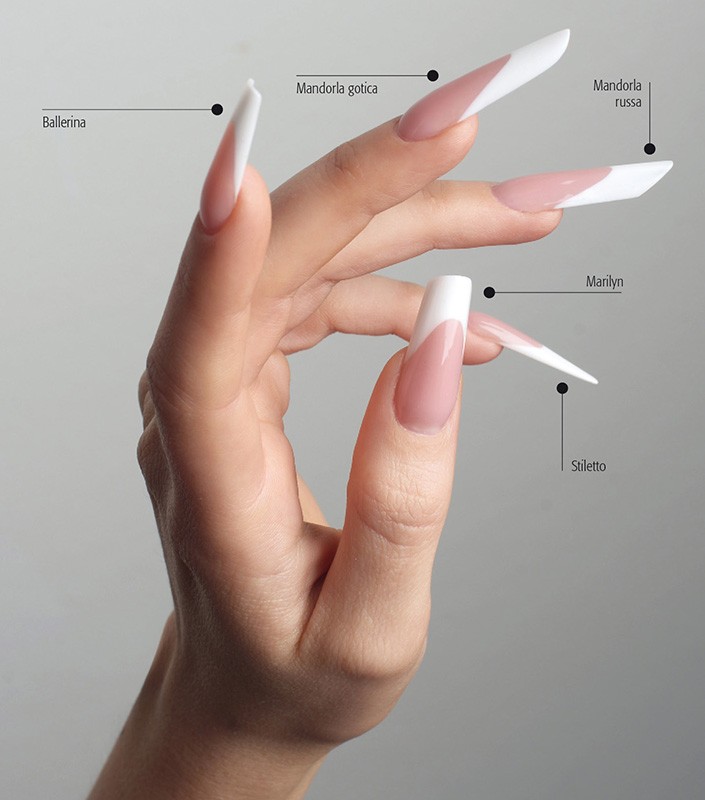
French Manicure: All types of a timeless classic

Welcome back!

Today I want to talk about the best known nail art: French Manicure.

I will illustrate the various typologies and I will explain in short the realization, let’s start!

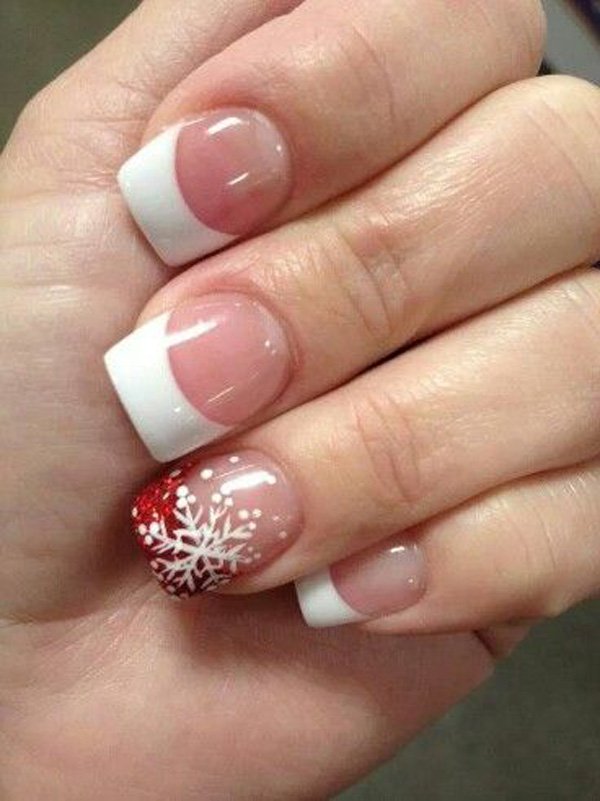
French in Surface

This is the easiest to make and in the salons it is the most common one, for the speed of realization.

This typology can be realized both with polish, gel polish, gel and acrylic.

This is because you can draw it on a nude toned color or pink base, the white edge on the tip.

Easy to make, in the salons it is often made also for the convenience in the removal, since it is drawn on the surface.

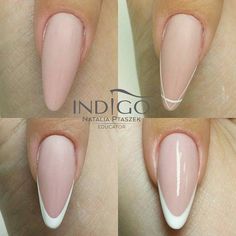
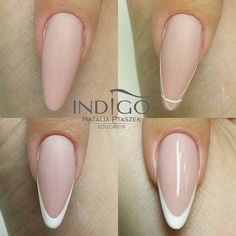
Deep French

The Deep French is achievable in combination with a reconstruction.

After performing the stretch, proceed using a white gel or acrylic builder to create the edge.

All this before creating the apex, for this it takes the name of deep.

So once you have drawn the edge with white, you can proceed with the structure above, with a clear builder.

This type of French is recommended for those with a rather long nail bed by nature.

Deep and Reverse French

The procedure of this type is very similar to the previous one, but has variations.

Also this must be created below the structure and on a stretch in gel or acrylic.

In addition, you need to create what is called a “wall”, with a gel cover.

The gel cover is pink and you need to create the inverse of the white edge.

Once you have created this guideline, just place the white builder next to the pink one and you’re done.

This technique is used to create French on nail beds with color alterations, or on the most extreme and long forms.

Both this type and the previous one require more time and in the refill they will never be completely eliminated, because below the structure itself.

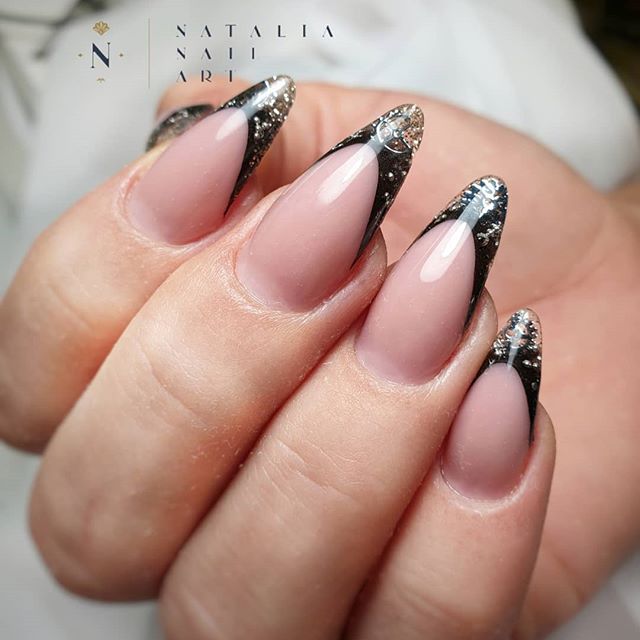
Speaking of french, we think of white to create the edge but of course we can choose the colors we prefer.

In the end the result should always be the same, without noticing the difference in technique used.

That’s all for today’s article, I hope I have clarified any doubts about the difference between the three techniques.

If you liked the article, share it and like it, see you soon!

SOFIA

French Manicure: Tutte le tipologie di un classico senza tempo

Bentornati!

Oggi voglio parlarvi della nail art e manicure più conosciuta: La French.

Illustrerò le varie tipologie e spiegherò in breve la realizzazione, iniziamo!

French Superficiale

Questa è la più facile da realizzare e nei saloni è quella più comune, per la velocità di realizzazione.

Questa tipologia si può realizzare sia con smalto, semipermanente, gel e acrilico.

Questo perchè basterà disegnare sopra una base color carne o rosa, la lunetta bianca in punta.

Facile da realizzare, nei saloni è realizzata spesso anche per la comodità nella rimozione, dato che è disegnata in superficie.

French Profonda

La French Profonda è realizzabile in abbinata ad una ricostruzione.

Dopo aver eseguito l’allungamento, si procede utilizzando un gel o acrilico builder bianco per creare la lunetta.

Tutto ciò prima di realizzare la bombatura, per questo prende il nome di profonda.

Quindi una volta disegnata la lunetta con il bianco, si può procedere con la struttura al di sopra, con un builder clear.

Questo tipo di French è consigliato a chi ha un letto ungueale piuttosto lungo di natura.

foto non mia

French Profonda e Inversa

Il procedimento di questa tipologia è molto simile a quella precedente, ma ha delle varianti.

Anche questa va creata al di sotto della bombatura e su di un allungamento in gel o acrilico.

In aggiunta bisogna creare quel che si chiama muretto, con un gel cover.

Il gel cover è rosa e bisogna creare l’inverso della lunetta bianca.

Una volta creata questa linea guida, basterà adagiare il builder bianco accanto a quello rosa e il gioco è fatto.

Questa tecnica è usata per creare french su letti ungueali con discromie, oppure sulle forme più estreme e lunghe.

foto non mia

Sia questo tipo che quello precedente richiedono tempi di realizzazione più lunghie e nel refill non verranno mai eliminati completamente, perchè al di sotto della struttura stessa.

Parlando di french, si pensa al bianco per reare la lunetta ma ovviamente ci si può sbizzarrire e scegliere i colori che più si preferiscono.

Alla fine il risultato dovrebbe essere sempre lo stesso, senza notare la differenza di tecnica usata.

Questo è tutto per l’articolo di oggi, spero di aver chiarito eventuali dubbi sulla differenza delle tre tecniche.

Se questo articolo vi è piaciuto lasciate un like e condividete.

Non dimenticate di seguirmi su Instagram e sul mio canale YouTube!

Alla prossima!

SOFIA