Archivi tag: nailtech

Sistema Acrigel e Dual Form: innovazione o trovata pubblicitaria?

Ciao a tutti!
Oggi voglio parlare di un nuovo prodotto ed una tecnica per utilizzarlo: il polygel e le polyform (o dual form).

Vedremo le sue caratteristiche e se effettivamente è una soluzione più pratica e veloce alla ricostruzione in cartina/tip.

Cos’é

Il polygel o acrigel è un prodotto ibrido, come il semipermanente.
Presenta caratteristiche del gel ma anche dell’acrilico.
Si modella con un pennello imbevuto di soluzione, come l’acrilico, però si polimerizza in lampada come un gel.

È un prodotto molto innovativo che negli ultimi tempi sta spopolando.
In particolare grazie al suo utilizzo con le polyform.

Utilizzo con cartina

Questo prodotto si può utilizzare senza problemi per creare una ricostruzione con cartina. Le regole della struttura saranno sempre le stesse. Si consiglia l’uso soprattutto durante l’estate, periodo in cui il gel è più probabile che coli e renda il lavoro meno agevole.

Si possono avere le comodità dell’acrilico che è più solido e denso da lavorare, senza però avere fretta che il prodotto si polimerizzi all’aria.

Utilizzo con polyform

Io stessa girando su instagram mi ritrovavo delle pubblicità riguardo questa nuova tecnica che prevede l’uso dell’acrigel.

In pratica bisogna applicare il prodotto dentro queste formine concave e poi semplicemente applicarle sull’unghia, polimerizzare e il lavoro è fatto.
O almeno tramite i video lo fanno sembrare così, facile e veloce.

Capisco pure io che chi produce questi kit deve vendere il più possibile e farsi pubblicità quindi comprendo anche il motivo per cui tramite i video promozionali sembri più facile e accessibile. Le persone saranno convinte a provare ed acquistare il kit.

Lascio un link di un post di una ragazza che mostra l’utilizzo delle dual form, ma se cercate su YouTube ne troverete tanti.

Ma ora vi spiego il mio punto di vista, sulla sconvenienza di questa nuova tecnica.

Scelta della polyform

Cosa molto importante in qualsiasi ricostruzione è la scelta della giusta tip, l’adattamento della cartina in modo da creare un risultato il più naturale e solido possibile.
Non è detto che in tutte quelle formine prefabbricate che ci venderanno, ce ne sia una adatta a noi.

ecco come si presentano le dual form

Scegliendo ad esempio una formina troppo grande, il prodotto potrebbe depositarsi sulla pelle, creando sollevamenti. Se invece fosse troppo piccola, non comprenderebbe bene tutta la porzione di unghia, indebolendo la struttura. Ricordo inoltre che i prodotti per le unghie devono entrare il meno possibile a contatto con la pelle, dal momento che sono fortemente allergizzanti.

Struttura

Siccome questo è un trattamento che nasce per essere facile e veloce, che si può fare a casa, non è contemplata la creazione della bombatura.
Una volta che la polyform viene attaccata, polimerizzata e rimossa, l’unghia ricostruita è già pronta. Senza bombatura.
Allora come può reggere una struttura del genere?

Potrebbe durare per un colpo di fortuna, però ci sono maggiori possibilità di fragilità della ricostruzione.

Refill

Ammettiamo che comunque siamo riusciti a creare una ricostruzione e che essa ci sia durata 3 settimane.
A questo punto come si procede per la ricrescita?
È impossibile non fare il refill, ma chi compra questi kit, non credo abbia pensato all’eventualità di dover eseguire un riempimento della nuova porzione di unghia.

Guardando i video promozionali, non viene lontamente mostrato il momento del riempimento della ricrescita, per cui i futuri clienti rimarranno ignari sul da farsi.

Inoltre credo che tra tutte le procedure del mondo dell’onicotecnica, il refill sia quello più importante che senza un minimo di informazione non si può eseguire.

Quindi considerando questi punti, credo che sia evidente che l’acrigel come prodotto è ottimo e versatile, però l’utilizzo delle polyform è sconsigliato.
A mio avviso è tutta una trovata pubblicitaria, piuttosto ingannevole.

Ovviamente come ho sempre detto, nei miei articoli esprimo il mio pensiero e se qualcuno ha trovato buono questo metodo, io non sono nessuno per negare le sue parole.

In questo mestiere ognuno trova il suo materiale e la sua tecnica preferita, non è detto che un prodotto sia usato da tutte le onicotecniche.

Detto questo, spero che il mio articolo vi sia piaciuto e spero di avervi reso consapevoli riguardo questa nuova tecnica.

Se questo articolo vi è piaciuto lasciate un like e condividete.

Non dimenticate di seguirmi su Instagram e sul mio canale YouTube!

Alla prossima!

SOFIA

Summer Nail Art

Hello everyone!

With the arrival of the warm season I decided to bring ideas for Nail Art to do in this period .

In addition to showing you the reference photo, I will also include photos of how I recreated those designs.

Let’s begin!

Clouds

Let’s start with this very simple and at the same time very cool design.

Blue-painted nails with slightly raised clouds.

There is nothing better than blue sky to represent beautiful summer days.

This is my version.

Sunflower

This nail art in its simplicity and with its light and bright colors gives immediately the idea of good weather!

I wanted to combine sunflower with a fluo yellow.

Fruits

The fruit, fresh and juicy is the typical summer snack. In this design we see the mini fruit applied on the nails, combined with a shade of yellow and pink.

I only have oranges and grapefruits so I decided to apply them on a yellow base. Obviously everything goes to personal taste.

Cherry / Papaya

Still on the subject of fruit, here are two more drawings. On the left a delicate red cherry combined with a baby rose, while on the right a lively papaya, placed next to orange.

Obviously my drawings will never be identical to those of the girls who designed the designs, but it’s nice to see their abilities even comparing and reproducing the works of others.

Flowers

Obviously they could not miss flowers. In particular these can be created with a simple dotter.

In the photo the design is sealed with a matte top coat, but I decided to polish it.

Leopard

It must be said that not everyone likes this fantasy, but combined with a fluorescent color like yellow immediately recalls summer.

Water Decals

Until now I have shown nail art that required a bit of practicality (but obviously it is not said that if you aren’t practical, you cannot reproduce them!).

There is a faster and easier solution to get very nice results and they are the Water Decal. They work more or less with the same mechanism as children’s tattoos, but if you want to know how to apply them, tell me that I’ll write an article about it.

Here on a water green base I applied a flower and with a dotter I made some small white dots to frame the whole. Although the realization took up little time, the result is very nice and makes a scene.

That’s all. If you liked these ideas and would like to recreate them, please do not hesitate to send them to me on Instagram . All the photos I took as inspiration do not belong to me, but to the profiles you see written in each photo.

I hope you enjoyed this post, I wish you a good summer and see you soon !!

SOFIA


Myths about Nails

Welcome back! In this post I want to debunk some myths that have always existed on the world of nails . Let’s start!

Nails breathe

Perhaps this is the sentence I hear mostly. There is the belief that products such as gel, gel polish and acrylic, used above the natural nail, prevent it from breathing, because covered.

Maybe some of you already know this, but all this is false !!

The nail plate, what we call nail, is a dead tissue , while the nail bed, the one that lies below is alive.

The nail has no “lungs” or similar things that allow it to live thanks to oxygen.

The nutrients that serve the nail come from the blood vessels in the nail bed . So through a proper nutrition and lifestyle we take care of the well-being and nourishment of nails

So a person can keep any product for years, without the nails suffering.

The gel ruins the nails

This is another thing that I hear very often and these words come from people who have been told or have experienced in first person a deterioration in the health of the nails after a treatment .

I’ll tell you the truth.

It is not the gel that ruins the nails , as as we have just said nails do not breathe.

But rather how the work is executed.

There are many things that can cause damage to the nail during a gel treatment.
For example, during the initial step of opacification, it can be filed too much, or when removing the product, it is directly filed on the nail stressing it . Or a too aggressive clamping.
All this can cause nail damage.

Obviously the responsibility is of the nail tech but we must not exclude that customers compete in ruining their nails . If by chance the product was rising in one place, it would be better to contact the professionist instead of file it it alone or even tear it off.

If a job is executed correctly, there is no risk that the nails ruin.

Reconstruction after Manicure

During the manicure in general nails are soaked in water to soften the skin etc ..

It’s believed that if your nails get wet , then it can’t be used gel because nails release humidity.

Obviously those who work in this sector know that this statement is wrong .

During the preparation of the natural nail, the Nail Prep or dehydrating is used, which serves to remove excess water and moisture from the nail.

So the problem doesn’t exist.

The lamp causes cancer

This is a very sensitive subject.

It’s said that the uv rays of the lamp used to polymerize products can cause skin tumors.

Obviously this is not true because the radiations created by the lamp are harmless both for the skin but also for the eyes.

n case some customer is not yet convinced then you can apply sunscreen to the skin or wear gloves that have cut ends.

These are the most common myths and if by any chance you have doubts about other beliefs, ask me without a problem. If you liked the article, share it with those you want and see you soon !!

SOFIA


Miti da sfatare sulle unghie

Bentornati! In questo post voglio sfatare alcuni miti che da sempre esistono sul mondo delle unghie. Iniziamo!

Le unghie respirano

Forse questa è la cosa più detta di tutte. C’è la credenza che i prodotti come gel, semipermanenti e acrilico, utilizzati sopra l’unghia naturale, impediscano a quest’ultima di respirare, perché coperta.

Magari qualcuno di voi già lo sa, ma tutto questo è falso!!

La lamina ungueale, quella che noi chiamiamo unghia, è un tessuto morto, mentre il letto ungueale, quello che risiede al di sotto è vivo.

L’unghia non presenta “polmoni” o cose simili che le permettono di vivere grazie all’ossigeno.

I nutrimenti che servono all’unghia provengono dai vasi sanguigni presenti nel letto ungueale. Quindi tramite una corretta alimentazione e stile di vita noi ci prendiamo cura del benessere e del nutrimento delle unghie.

Quindi una persona può tenere qualsiasi prodotto anche per anni, senza che le unghie soffrano.

Il gel rovina le unghie

Questa è un’altra cosa che sento spessissimo e queste parole le sentiamo da persone a cui è stato raccontato o comunque hanno vissuto in prima persona un peggioramento della salute delle unghie in seguito ad un trattamento.

Vi svelo la verità.

Non è il gel a rovinare le unghie, dato che come abbiamo appena detto le unghie non respirano.
Bensì come il lavoro è eseguito.

Ci sono molte varianti che possono causare danni all’unghia durante un trattamento gel.
Ad esempio durante il momento iniziale dell‘opacizzazione si lima troppo, oppure quando si rimuove il prodotto si lima direttamente sull’unghia stressandola. O ancora una pinzatura troppo aggressiva.
Tutto ciò può causare danni all’unghia.

Ovviamente la responsabilità è dell’onicotecnica ma non bisogna escludere che le clienti concorrano nel rovinarsi le unghie. Se per caso il prodotto si stesse sollevando in un punto, sarebbe meglio contattare la professionista invece che limarselo da sole o addirittura strapparlo.

Se un lavoro è eseguito correttamente, non c’è rischio che rovini le unghie.

Ricostruzione dopo manicure

Durante la manicure in genere si immergono le unghie nell’acqua per ammorbidire la pelle etc..

Circola questa credenza che se le unghie vengono bagnate, dopo non sia possibile ricostruire perché le unghie rilasciano umidità.

Ovviamente chi lavora in questo settore sa che questa affermazione è sbagliata.

Durante la preparazione dell’unghia naturale si usa il Nail Prep o deidratante che appunto serve a rimuovere l’acqua e l’umidità in eccesso dell’unghia.

Dunque il problema non sussiste.

La lampada fa venire il cancro

Questo è un argomento molto delicato. Gira anche questa credenza.

Ovvero che i raggi uv della lampada che si usa per far polimerizzare i prodotti possa causare tumori alla pelle.

Ovviamente non è vero perché le radiazioni create dalla lampada sono innocue sia per la pelle, ma anche per gli occhi.

Nel caso qualche cliente non fosse ancora convinta allora si può applicare sulla pelle della crema solare oppure far indossare dei guanti che hanno le punte tagliate.

Questi sono i miti più comuni e se per caso aveste dei dubbi su altre credenze, chiedetemi pure senza problema. Se vi è piaciuto l’articolo condividete pure con chi volete e alla prossima!!

Se questo articolo vi è piaciuto lasciate un like e condividete.

Non dimenticate di seguirmi su Instagram e sul mio canale YouTube!

SOFIA

All about Files

Hello everyone!

Today I write this post because I want to talk about the magic wand of all nail technicians: File

This is one of the most important tools in this work and it is necessary to know its properties in order to fully exploit its potential.

What’s this

The file is essentially a tool composed of abrasive paper, which serves to file the various products used in the Nails world such as gels, acrylics, acrigel, gel polish etc.

Grain

Usually they have two faces, which have different grain. The grain represents the major or minor abrasiveness.

The grain is represented by numbers.

The most abrasive file is the one with 80 grain, and looking at it on the surface you will clearly see that it is irregular and scratches a lot.

In contrast, the least abrasive is 240, and looking at it will look smoother.

Use

Obviously different abrasives have been created to cover different roles.

80/100/120/150

These are the most abrasive files. Usually only 80/100 are used.

They are used to shorten nails and remove reconstructions, thus eliminating color and lowering the structure. You have to be very careful because you don’t have to file on the nail plate. You risk damaging it.

180/200/240

These are the least abrasive ones. Used with 180 attention can be used to matte the natural nail even if I advice to use a 240 , so you don’t run the risk of damaging your nails.

They serve to finish the structure and above all they are used after more abrasive files to eliminate the ruts left by the first one.

Buffer

Buffers are those softer files, usually in the shape of a brick. These also have the grain, but compared to the files they will always be less abrasive.

They are usually used for mattifying nails or removing ruts. I do not recommend using this to matte the nail because of their softer texture. It won’t allow you to reach the smallest nail points. They are less accurate than files that allow you to decide where and how to file.

Obviously after some time of use, the files will always become less abrasive and we will have to throw them away. This depends on both the use we make of it , and on the quality of the files.

Maintenance

Files should be strictly personal tools . Let me explain better.

For each client we serve, we should use new files , as a matter of security.

For example, Fungus nest in dust , especially in that of files. If we use a file that we do not know is infected on a healthy client, we will most likely transmit the mycosis . Or unintentionally we cut a client that we don’t know have infected blood, and then we cause a wound on another healthy client who risks infection.

I don’t want to scare you by saying that. I know that making nails seems a simple thing, without any risk, but this depends on the training and skills of an operator. It is also necessary to calculate all these things, at the level of hygiene to get a good and professional job.

So you are wondering what is the solution to all this?

One could be to throw away the files for each client but you too understand that it would be a too big investment.

Simply keep the files in a bag aside for each customer, so they will only use those for the particular person . Or you can still buy washable files . These can be soaked in the Peracetic acid, a sterilizing liquid.

Tip

After purchasing a new file, rub the edges against another file, so as to soften them and not risk cutting the skin.

Electric Nail File

Files are importantl object but in the long run doing everything with them could be very tiring but above all it takes a lot of time. And this is where the electric file comes into play. I won’t go into it much in this article but I want you to understand the differences.

The electric file is a tool that works with electricity and has a body to insert various tips, which have different tasks . Turning it on, it will start to rotate more or less quickly . After that you can start working. This file is much faster and more practical but you have to know how to use it because otherwise you risk much more causing damage to the nail plate . Often files and the electric one are used together . With the electric file you do the majority of the work and faster , with the file you can work on details and you have more control.

The post is finished, I hope I have clearly explained everything there is to know about files. Obviously if you have questions go ahead and like this post if you like it share it and I like it.

See you soon !!

SOFIA

Tutto sulle Lime

Ciao a tutti!

Oggi scrivo questo articolo perché voglio parlare della bacchetta magica di tutte le onicotecniche: La Lima.

Questo è uno degli attrezzi fondamentali in questo lavoro e bisogna conoscerne le proprietà in modo da sfruttarne a pieno il potenziale.

Cos’è

La lima sostanzialmente è un attrezzo composto di carta vetro, carta abrasiva, che serve a limare i vari prodotti usati nel mondo Nails come gel, acrilici, acrigel, semipermanente etc..

Grana

Solitamente esse presentano due facce, che hanno grana diversa. La grana rappresenta la maggiore o minore abrasività.

La grana è rappresentata da numeri.

La lima più abrasiva è quella con grana 80, e guardandola in superficie si vedrà chiaramente che è irregolare e gratta molto.

Al contrario la meno abrasiva è la 240, e guardandola avrà un aspetto più liscio.

Utilizzo

Ovviamente sono state create diverse abrasività per coprire ruoli diversi.

80/100/120/150

Queste sono le lime più abrasive. Di solito si usano solamente 80/100.

Vengono usate per accorciare le unghie e smontare le ricostruzioni, dunque eliminare il colore ed abbassare la struttura. Bisogna prestare molta attenzione perché non bisogna limare con una 80 sull’unghia naturale. Si rischierebbe di danneggiarla.

Lima 80 dal sito Passione Unghie

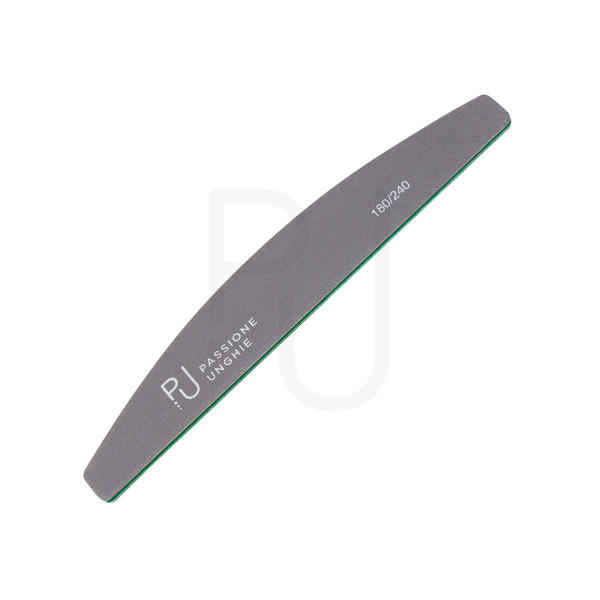
180/200/240

Queste sono quelle meno abrasive. Con delicatezza la 180 può essere usata per opacizzare l’unghia naturale anche se consiglio di usare una 240, così non si corre il rischio di rovinare le unghie.

Servono per rifinire la struttura e soprattutto vengono usate dopo lime più abrasive per eliminare i solchi lasciate da quest’ultime.

Lima 180/240 dal sito Passione Unghie

Buffer

I Buffer sono quelle lime più morbide, solitamente a forma di mattoncino. Anche questi presentano la grana, ma rispetto a le lime risulteranno sempre meno abrasive.

Di solito sono usati per opacizzare le unghie o per rimuovere i solchi. Io sconsiglio l’uso per l’opacizzazione perché a causa della loro consistenza più morbida, non permettono di raggiungere i punti di unghia più piccoli. Sono meno precise delle lime che invece ti permettono di decidere dove e come limare.

Ovviamente dopo qualche tempo di utilizzo, le lime diventeranno sempre meno abrasive e ci toccherà buttarle. Questo dipende sia dall’uso che ne facciamo, sia dalla qualità delle lime.

Manutenzione

Le Lime dovrebbero essere degli attrezzi strettamente personali. Mi spiego meglio.

Ad ogni cliente che serviamo, dovremmo usare delle lime nuove, per una questione di sicurezza.

Ad esempio i funghi si annidano nella polvere, soprattutto in quella delle lime. Se usiamo una lima che non sappiamo essere infetta su una cliente sana, molto probabilmente le trasmettiamo la micosi. Oppure involontariamente tagliamo una cliente che non sappiamo avere il sangue infetto, e poi provochiamo una ferita su un altra cliente sana che rischia l’infezione.

Non voglio spaventarvi dicendo ciò. Lo so che fare unghie sembra una cosa semplice, senza alcun rischio, ma ciò dipende dalla formazione e dalle competenze di un’operatrice. Bisogna mettere in calcolo anche tutte queste cose , a livello di igiene per ottenere un lavoro buono e professionale.

Allora vi state chiedendo qual è la soluzione a tutto ciò?

Una potrebbe essere quella di gettare via le lime per ogni cliente ma capite pure voi che sarebbe un investimento troppo grande.

Basterà semplicemente tenere da parte le lime in un sacchettino per ogni cliente, così si useranno solo quelle per la determinata persona. Oppure ancora si possono comprare le lime lavabili. Queste si possono immergere nel Peracetico, un liquido sterilizzante.

Consiglio

Dopo aver acquistato una lima nuova, sfregate i bordi contro un’altra lima, in modo da ammorbidirli e non rischiare di tagliare la pelle.

Fresa

Le lime sono un oggetto fondamentale però a lungo andare fare tutto con loro potrebbe essere molto faticoso ma soprattutto porta via molto tempo.

Ed è qui che entra in gioco la fresa. Non la approfondirò molto in questo articolo però voglio farvi capire le differenze.

La fresa è un attrezzo che funziona con la corrente e possiede un corpo dove inserire varie punte, che hanno compiti diversi. Azionando la fresa essa inizierà a far ruotare più o meno velocemente le punte. Dopo di che si può iniziare a lavorare. La fresa è molto più veloce e pratica però bisogna saperla usare perché sennò si rischia molto di più causare danni alla lamina ungueale. Spesso lima e fresa viaggiano accompagnate. Con la fresa si fa il grosso e più in fretta, con la lima si aggiustano i dettagli e si ha un maggiore controllo.

L’articolo è finito, spero di avervi spiegato chiaramente tutto ciò che c’è da sapere sulle lime. Ovviamente se avete delle domande fate pure e se questo post vi è piaciuto condividete e mettete mi piace.

Se questo articolo vi è piaciuto lasciate un like e condividete.

Non dimenticate di seguirmi su Instagram e sul mio canale YouTube!

Alla prossima!!

SOFIA

All about Gel Polish

Welcome Back!

Today I want to talk about a very versatile and by now well known product: Gel Polish

If you think you know them well enough, well, today I think I’ll be able to surprise you.

What are Gel Polishes

Gel Polishes are relatively new products, designed to have both the characteristics of polishes, and gels : they are hybrids

In fact we can sometimes find them with the name of Soft Gel.

Features

They have some characteristics of polishes and others of the gel as already mentioned.

As the polish is easy to apply , it is thin and very important, it doesn’t need a structure below.

Instead, like gel, it needs a lamp to dry , has the sticky layer and lasts more time.
As I already said in the article “Who I Am” , I also started to approach the world of nails with gel polish . Anyone even just looking at a well-made video can make cute jobs . Obviously, however, by attending training courses, we provide additional information which even I didn’t know.

Types of Gel Polish

I admit that I only knew a type of gel polish and was “the one that melts”.

Actually, there are 3!

Easy off

Easy Off (or Soft Gel) are the ones that most resemble a gel , in fact they don’t melt in acetone and you can create very small stretches. This type is a good alternative to gel, because it can last up to a month , but it does not have the typical thickness of the gel.

As for the removal, you have to be very delicate. You must use a file and pay close attention. Since the product is very thin, once the color is removed there is the possibility of reaching and filing the nail plate.

I don’t want to terrify you, but only advise you to use a file with little grain , or at any rate pay close attention to removal.

Soak Off

This is the second type of product.

Compared to easy offs, its lasting is inferior . This is given by a less thorough preparation that will cause less product adherence . On average we talk about 15 days , but obviously it can vary based on the work of the operator and the lifestyle of the client.

Unlike easy off, removal takes place through immersion of the product in the acetone or in its solvent.

One Step

There are still One Step . These are easy offs, so you have to file them to remove , but unlike the first ones, they don’t last very long. This is because the steps to apply one step are reduced to minimum . They are fast products to use but in my opinion is unsuitable because the outcome won’t be excellent.

With this overview, I wanted to tell you about my experience.

I’ve always used gel polishes by Layla , excellent products, a little expensive but where I live, they only had these. In their instructions there was talk of acetone for removal, so they should have been Soak Off. I don’t know how many times I tried but they really NEVER melted !!
I was inexperienced then and not knowing what to do I took the file and removed it. In spite of everything, in the end they were Easy Off.
This is to tell you to pay close attention to the products you choose according to your needs and if you need to serve customers, and first try the products on yourself.

Now I give you advice on what products of all types to use.

Easy Off / One Step

I recommend those from the Layla . Browsing the site you will find many shades of color, and also many types of gel polishes , such as those that change color based on the temperature, or the One Step .

Similarly I recommend those of the Mesauda. Here too the choice of colors is vast and this Brand also owns the One Step line.

Soak Off

As famous brands of soak off we definitely have the OPI . Known for its polishes, it also presents the line of gel polish. These dissolve in acetone.

Another famous brand is the CND. Its semipermanents are called Shellac. Like those of the OPI, they are removed without a file. These are the colors available.

Obviously, I wanted to show you just a few brands as an example. Other brands that I can recommend are: Estrosa , Passione Unghie , La femme , Kharma Nails , Sofia Nail , Nail Over

I could go on for days but like in every job where various products are used, my advice is to test various alternatives and then choose the best one according to our needs.

I hope this post has clarified your ideas on gel polishes. I hope you enjoyed it and as always if you want share and like it.

See you soon !!

SOFIA

Tutto sui semipermanenti

Bentornati!

Oggi voglio parlarvi di un prodotto molto versatile e oramai molto conosciuto: Il Semipermanente.

Se credete di conoscerli abbastanza bene, be’, oggi credo che riuscirò a stupirvi.

Buona Lettura.

Cosa Sono

I semipermanenti sono prodotti relativamente nuovi, pensati per avere sia caratteristiche degli smalti, sia dei gel: sono degli ibridi.

Infatti a volte possiamo trovarli con il nome di Soft Gel (Gel morbidi).

Caratteristiche

Essi come già detto presentano alcune caratteristiche degli smalti ed altri del gel.

Come lo smalto è facile da applicare, è sottile e cosa molto importante, non ha bisogno di una struttura al di sotto.

Invece come il gel, ha bisogno della lampada per asciugarsi, presenta lo strato di dispersione ed è molto più duraturo.

Come già dicevo nell’articolo “Ciao Mi Presento”, ho iniziato anche io ad avvicinarmi al mondo delle unghie con i semipermanenti. Chiunque anche solo guardando un video ben fatto può realizzare lavori carini. Ovviamente però frequentando i corsi di formazioni vengono fornite delle informazioni aggiuntive che io stessa ignoravo.

Tipi di semipermanente

Ammetto che conoscevo solamente un tipo di semipermanente, detto alla brutta è “quello che si scioglie”.

In realtà ne esistono ben 3!

Easy off

Gli Easy Off ( o Soft Gel) sono quelli più somiglianti ad un gel, infatti non si sciolgono in acetone e si possono creare dei piccolissimi allungamenti. Questo tipo è una buona alternativa al gel, perché può durare fino ad un mese, però non ha il tipico spessore del gel.

Per quanto riguarda la rimozione bisogna essere molto delicate. Bisogna usare una lima e prestare molta attenzione. Siccome il prodotto è molto sottile, una volta levato il colore c’è la possibilità di raggiungere e limare la lamina ungueale.

Non voglio terrorizzarvi, ma solo consigliarvi di usare una lima con poca grana, o comunque prestare molta attenzione nella rimozione.

Soak Off

Questa è la seconda tipologia di prodotti.

Rispetto agli easy off, la sua durata è inferiore. Ciò è dato da una preparazione meno approfondita che causerà meno aderenza del prodotto. In media si parla di 15 giorni, però ovviamente può variare in base al lavoro dell’operatrice e allo stile di vita della cliente.

A differenza dell’easy off, la rimozione avviene attraverso l’immersione del prodotto nell’acetone o comunque nel suo solvente.

One Step

Esistono ancora i semipermanenti One Step. Questi sono easy off, dunque bisogna limarli per rimuoverli, ma a differenza dei primi, non durano molto. Questo perché i passaggi per applicare i one step sono ridotti al minimo. Sono prodotti veloci da usare però a mio parere sconvenienti perché la resa non sarà ottima.

Fatta questa panoramica volevo raccontarvi la mia esperienza.

Ho sempre usato i semipermanenti della Layla, ottimi prodotti, un po’ cari ma dove vivo io avevano solo questi. Nelle loro istruzioni si parlava di acetone per la rimozione, dunque avrebbero dovuti essere Soak Off. Non so quante volte ci avrò provato ma davvero non si scioglievano MAI !!

Allora ero inesperta e non sapendo che fare prendevo la lima e lo rimuovevo. Nonostante tutto, alla fine erano Easy Off.

Questo è per dirvi di prestare molta attenzione ai prodotti che scegliete in base alle vostre esigenze e se dovete servire delle clienti, prima provate i prodotti su voi stesse.

Ora vi do un consiglio su che prodotti di ogni tipologia usare.

Easy Off / One Step

Vi consiglio quelli della Layla. Navigando sul sito troverete molte tonalità di colore, e anche molte tipologie di smalto, come ad esempio quelli che in base alla temperatura cambiano colore, oppure i One Step.

Similmente vi consiglio quelli della Mesauda. Anche qui la scelta colori è vasta e questo Brand possiede anche la linea One Step.

Soak Off

Come marche famose di semipermanenti soak off abbiamo sicuramente la OPI. Conosciuta per i suoi smalti, presenta anche la linea di semipermanenti. Questi si sciolgono in acetone.

Queste sono alcune delle colorazioni disponibili.

Altro brand famoso è quello della CND. I suoi semipermanenti sono chiamati Shellac. Come quelli della OPI, si rimuovono senza lima. Queste sono le colorazioni disponibili.

Ovviamente ho voluto farvi vedere come esempio solo alcune marche. Altri brand che posso consigliarvi sono: Estrosa, Passione Unghie, La femme, Kharma Nails, Sofia Nail, Nail Over

Potrei continuare per giorni ma come in ogni lavoro in cui si usano vari prodotti, il mio consiglio è quello di testare varie alternative per poi scegliere la migliore in relazione alle nostre esigenze.

Spero che questo articolo vi abbia chiarito le idee sui semipermanenti, mi auguro che vi sia piaciuto e come sempre se volete condividete e mettete mi piace.

Se questo articolo vi è piaciuto lasciate un like e condividete.

Non dimenticate di seguirmi su Instagram e sul mio canale YouTube!

Alla prossima!!

SOFIA