Archivi tag: gel

Semipermanente Trebosi sulla Ricostruzione: tre settimane dopo

Ciao a tutti e bentornati sul mio blog!

Come promesso, oggi vi mostro come si sono comportati i semipermanenti della Trebosi sulle unghie ricostruite. Se vi siete persi l’articolo dove le realizzo, vi lascio qui il link!

Iniziamo!

Appena realizzate

Ecco le unghie appena realizzate. Non mi dilungo troppo perchè già ne abbiamo parlato nell’articolo precedente.

1 settimana dopo
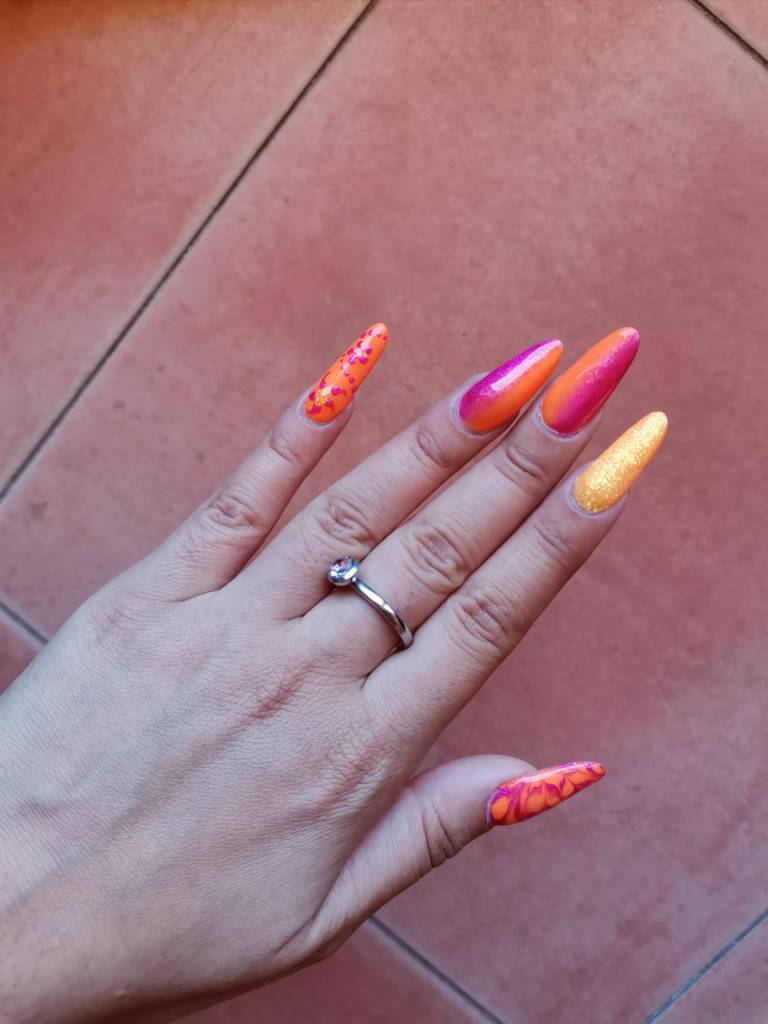
Queste sono le unghie dopo una settimana. A parte la ricrescita dell’unghia, devo dire che sono invariate, sia nel colore che nel lucido, e questo è un buon segno. Proseguiamo.

2 settimane dopo

La ricrescita aumenta, ma i prodotti della Trebosi restano li, niente li smuove😂.

Come potete vedere anche voi sono ancora perfettamente lucide.

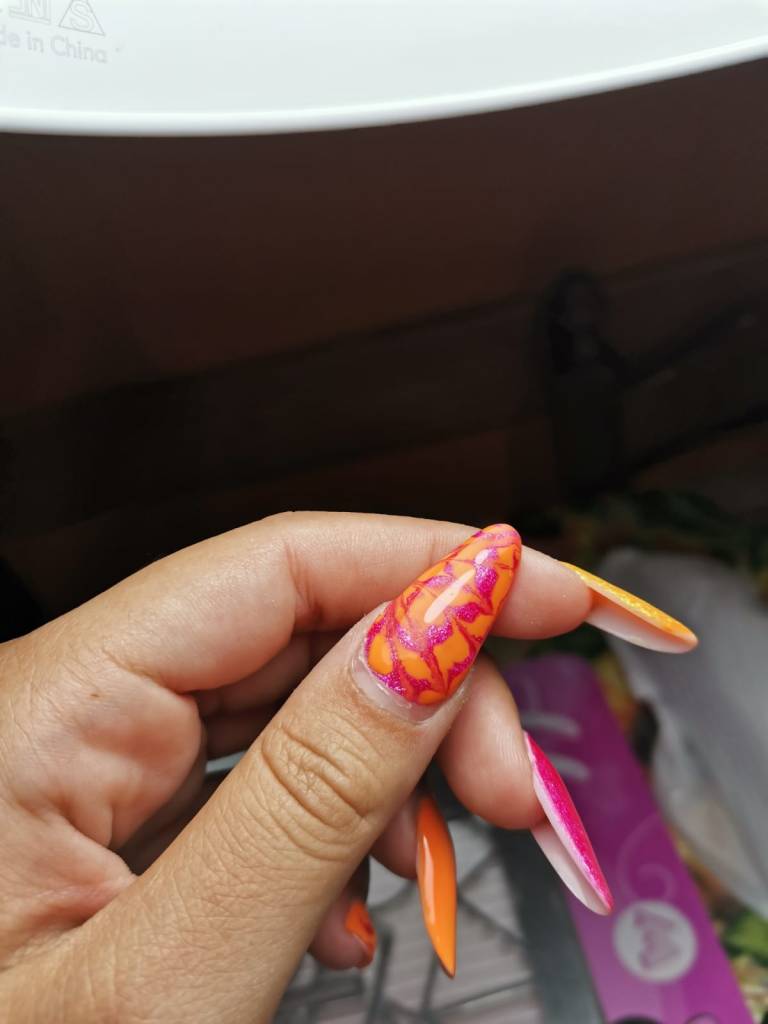
3 settimane dopo

Ecco qua le unghie alla scadenza. Il mignolo mi ha abbandonato, ma a noi non importa tanto la struttura, quanto l’evoluzione e il test sui semipermanenti.

Vedete anche voi che sono perfette, quindi passiamo alle considerazioni finali.

Considerazioni finali

Devo dire che sono molto soddisfatta di questi prodotti.

Comincerei facendo i complimenti all’azienda sia per la qualità dei prodotti, ma anche per la scelta dei colori. Mi hanno fatto tantissimi complimenti per queste unghie e io ovviamente facevo il loro nome.

Passiamo ai prodotti.

Questi colori non si sono scoloriti, rimanendo per tre settimane invariati.

L’arancione mi preoccupava perché è un colore fluo.

Siamo d’estate e potrebbe capitare che con il sole, alcuni colori, soprattutto quelli chiari o quelli fluo si possano scolorire o cambiare addirittura colore, invece vedete pure voi che questi sono identici.

Volevo anche farvi notare che il colore non si è sbeccato o comunque non si è sollevato dalle unghie ricostruite.

Per quanto riguarda i glitter dell’effetto zucchero, ovviamente un po’ si sono levati rispetto all’inizio, ma con la loro grana fine sono rimasti ben attaccati all’unghia. Inoltre nonostante la vita quotidiana con esse, non hanno perso luminosità.

Per quanto riguarda il lucido, sono estremamente soddisfatta. In tre settimane è rimasto come appena messo, senza graffi o senza opacizzarsi.

Devo dire che spesso sono andata al mare e li c’è la sabbia che potrebbe graffiarlo, ho usato le lime senza proteggere quelle unghie, magari le ho graffiate ma esse non presentano segni evidenti.

Facendo pulizie o lavando piatti non sempre ho usato i guanti ed esse non si sono opacizzate.

Nelle prossime unghie che farò, anche ricostruite, lo riuserò, mi è piaciuto molto.

Quindi questi prodotti sono promossi a pieni voti.

Ringrazio come sempre l’azienda Trebosi per avermi fatto provare i loro prodotti.

Ho anche realizzato un video Youtube dove smonto queste unghie, vi lascio qui il link!

Link Utili

Qua sotto vi lascio tutti i link dei prodotti di cui parlo, così se foste interessate potete andare a dare un’occhiata.

Cleaner

https://trebosi.com/rimuovi-dispersione-cleaner-250ml.html

Base e Top 2 in 1

https://trebosi.com/base-e-lucido-2in1-donna.html

Colore arancione

https://rebrand.ly/semipermanente-donna-jenny

Colore Fucsia

https://rebrand.ly/semi-chrisel

Buffer

https://trebosi.com/buffer-bianco.html

Glitter arancioni

https://trebosi.com/polvere-glitter-orange-juice.html

Glitter gialli

https://trebosi.com/polvere-glitter-giallo-titti-fluo.html

L’articolo di oggi termina qui, grazie mille per la lettura.

Se questo articolo vi è piaciuto lasciate un like e condividete.

Non dimenticate di seguirmi su Instagram e sul mio canale YouTube!

Alla prossima!

SOFIA

Nail art galassia con colori gel

Bentornati sul mio blog!

Volevo mostrarvi come realizzo l’effetto galassia sulle unghie, ma non con gli smalti, bensì con i colori gel.

Iniziamo!

Base

Come base utilizzo colori scuri, come il blu e il nero, e li sfumo tra loro con un pennello con poche setole.

Dopo di che sigillo e opacizzo le unghie per poter realizzare il decoro.

Bianco

Con un pezzo di spugnetta e del bianco, realizzo una striscia continuativa tra le unghie, picchiettando il colore.

Non è necessario essere precisi, in alcune zone posso applicare più prodotto, in altre meno.

Colori

Con lo stesso procedimento applico sulla sfumatura che ho creato dei colori che ricordino un po’ una galassia, quindi: giallo, verde, viola etc.

Comunque si possono scegliere i colori che preferiamo.

Stelle

Dopo di che scelgo alcuni punti e realizzo delle stelle stilizzate, oppure dei puntini a mio piacimento.

Glitter

Per dare un tocco di luce in più, sempre con la spugnetta tampono un semipermanente glitter oro e argento.

Ed ecco qua il modo per realizzare facilmente una galassia sulle nostre unghie.

Vi piace il risultato?

Ve le faccio vedere anche indossate.

Se volete sapere come realizzare queste unghie applicabili, leggete questo articolo dove lo spiego.

Inoltre sul mio canale, c’è un video dove le realizzo, ecco il link!

Se questo articolo vi è piaciuto lasciate un like e condividete.

Non dimenticate di seguirmi su Instagram e sul mio canale YouTube!

Alla prossima!

SOFIA

How to create galaxy nails with gel colors

Welcome back to my blog!

I wanted to show you how I create the galaxy effect on the nails, but not with the polishes, but with gel colors.

Let’s start!

Base

As a base I use dark colors, such as blue and black, and blend them with a brush with a few bristles.

After which I seal and mattify the nails in order to create the decoration.

White

With a piece of sponge and white, I make a continuous line between the nails, tapping the color.

It is not necessary to be precise, in some areas I can apply more product, in others less.

Colors

With the same procedure I apply on the nuance that I have created of the colors that remind a little of a galaxy, therefore: yellow, green, purple etc.

However you can choose the colors you prefer.

Stars

After which I choose some points and make stylized stars, or dots as I like.

Glitter

To give an extra touch of light, always use a sponge to wipe a gel polish gold and silver glitter.

And here’s the way to easily make a galaxy on our nails.

Do you like the result?

I’ll show them worn too.

If you want to know how to make press on nails, read this article where I explain it.

On my YouTube channel you will find a video, where I do this nail art, I leave here the link!

If you liked this article, leave a like and share.

Don’t forget to follow me on Instagram and on my YouTube channel!

See you next time!

SOFIA

Differenza tra i vari metodi di ricostruzione

Bentornati sul mio blog!

Oggi voglio parlarvi dei vari metodi che esistono per ricostruire le unghie e le differenze tra essi.

Iniziamo!

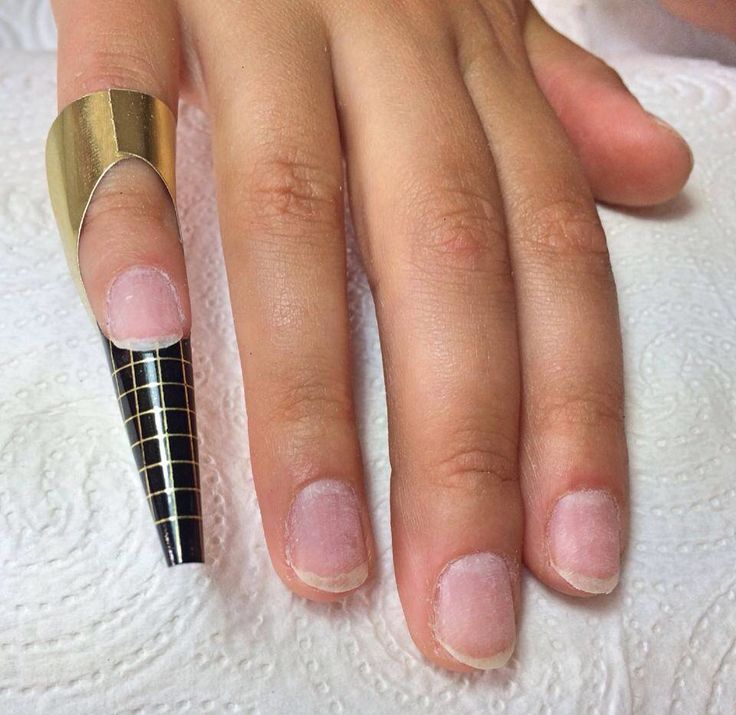
Cartina

Questo metodo è il più utilizzato perché si può ottenere sia un risultato molto naturale, ma anche estremo, ricostruendo le forme estreme.

Con la cartina si ottiene tramite il giusto posizionamento della cartina e tramite la pinzatura, un ottima curva a c.

Questa ricostruzione richiede un po’ di tempo per l’adattamento delle cartine alle 10 unghie, ma comunque i risultati ottenuti sono molto belli.

Tip

Questa ricostruzione è un po’ più veloce di quella con le cartine perché una volta trovata la corretta tip che si adatta all’unghia basta incollarla e si può procedere creando la struttura

Il rischio è quello di sbagliare la misura della tip.

Se si sceglie troppo piccola non comprenderà i laterali, se invece è troppo grande risulta sproporzionata sull’unghia.

Comunque con le tip, che sono di un materiale plastico, non ai può pinzare, si rischia di creare una piega o danneggiare la tip, quindi il risultato sarà un po’ meno naturale

Inoltre forme come mandorla, rotonda, ovale si possono ottenere da una tip quadrata però i laterali verranno eliminati compromettendo la struttura dell’unghia

Volendo si possono comprare le tip già con la forma.

Dual Form

Questa tecnica è piuttosto recente.

Si usa una sorta di tip inversa dove si applica il polygel.

Dopo di che si mette questa tip sull’unghia e in teoria si ha la struttura già pronta Basterebbe rifinire la forma e stendere il colore.

Il problema è trovare delle dual form di qualità.

Ce ne sono alcune troppo curvate verso il basso, altre troppo dritte e quindi la struttura risulterà sbilanciata.

E anche qui è importante scegliere la giusta misura, sennò l’unghia risulterà troppo artificiale.

Comunque nel caso in cui si abbiano ottime dual form e ottimo acrygel questo procedimento è molto più rapido rispetto agli altri.

Tip intera

Questo procedimento è abbastanza simile a quello di prima.

Bisogna trovare delle tip di qualità, possibilmente con una bella curva a c, e solubili nel remover,in modo da dover evitare di limare fino all’unghia naturale.

Si opacizza l’interno della tip, ai applica del gel costruttore e si preme dall’alto al basso la tip sull’unghia, in modo da far scorrere tutto il prodotto sulla lamina. Stringendolo si va a catalizzare in lampada.

Anche questo metodo è molto veloce perché non c’è bisogno di creare la struttura.

Però bisogna trovare delle tip adatte, che abbiano una curvatura tale che si crei autonomamente una bombatura.

Vi lascio il link di un video dove le uso.

Fibre di vetro

Le fibre di vetro sono del materiale sottile ma molto resistente.

Si applicano sul margine libero dell’unghia e le si ricoprono con il gel costruttore

Bisogna prestare bene attenzione a posizionarle bene sui laterali sennò si compromette la struttura.

Anche queste permettono un’ottima pinzatura e curva a c.

Una volta creato l’allungamento si crea la struttura.

Queste fibre possono essere usate per eseguire piccole riparazioni, come i fogli di seta che si usano con lo stesso procedimento.

Dip powder

Questa è una polvere acrilica, spesso usata per le coperture ma ho visto anche ricostruzioni con questo metodo.

Si applica una tip, invece del gel o acrilico si usa questa polvere e una colla speciale tra ogni strato.

Infine un attivatore che indurisce la polvere e ti permette di limarla.

Questo metodo secondo me è più macchinoso e richiede un po’ più di tempo,, inoltre la struttura creata non è delle ottimali.

Senza cartina

Questo metodo si utilizza soprattutto su chi ha le unghie cortissime, tipo le onicofagiche.

Con un prodotto piuttosto rigido come Acrygel o acrilico, si ricrea un minimo di lunghezza, giusto fino al polpastrello.

Quando poi l’unghia sarà abbastanza lunga allora si potrà scegliere uno dei metodi a mostra scelta.

Questi sono i principali metodi di ricostruzione che esistono.

Voi quale preferite?

Se questo articolo Vi è piaciuto lasciate like e condividete.

Non dimenticatevi di seguirmi su Instagram e sul mio canale youtube.

Alla prossima!

SOFIA

Difference between various reconstruction methods

Welcome back to my blog!

Today I want to talk to you about the various methods that exist to reconstruct the nails and the differences between them.

Let’s start!

Nail form

This method is the most used because it is possible to obtain both a very natural result, but also an extreme one, by reconstructing the extreme forms.

With the nail form you get, through the correct positioning of it and through the pinching, an excellent c-curve.

This reconstruction takes some time to adapt the nail forms to the 10 nails, but in any case the results obtained are very beautiful.

Tip

This reconstruction is a little faster than the one with the nail form because once you have found the correct tip that fits the nail just glue it and you can proceed creating the structure

The risk is to miss the tip size.

If you choose too small it will not include the sidewalls, if it is too large it is disproportionate on the nail.

However with the tips, which are of a plastic material, it cannot pinch it, you risk creating a crease or damaging the tip, so the result will be a little less natural.

In addition, shapes such as almond, round, oval can be obtained from a square tip, however the sides will be eliminated by compromising the structure of the nail

If you want you can buy the tips already with the form.

Dual Form

This technique is quite recent.

A sort of inverse tip is used where polygel is applied.

After which you put this tip on the nail and in theory you have the structure ready. It would be enough to refine the shape and apply the color.

The problem is finding quality dual forms.

There are some too curved downwards, others too straight and therefore the structure will be unbalanced.

And here too it is important to choose the right size, otherwise the nail will be too artificial.

However, if you have excellent dual forms and excellent acrygel, this procedure is much faster than the others.

Full tip

This process is quite similar to the previous one.

You need to find quality tips, possibly with a nice c-curve, and soluble in the remover, so you have to avoid filing up to your natural nail.

You have to opaque the inside of the tip, the builder gel is applied and the tip is pressed from top to bottom, so that all the product flows on the nail plate. You cure it, holding the tip in place.

This method is also very fast because there is no need to create the structure.

But you need to find suitable tips that have such a curvature that you can create a camber yourself.

Fiberglass

Glass fibers are thin but very resistant material.

They are applied on the free edge of the nail and covered with the builder gel

Care must be taken to position them well on the sides, otherwise the structure will be compromised.

These also allow for excellent pinching and c-curves.

Once the extension is created, the structure is created.

These fibers can be used for minor repairs, such as silk sheets that are used in the same way.

Dip powder

This is an acrylic powder, often used for coating but I have also seen reconstructions with this method.

A tip is applied, instead of the gel or acrylic this powder is used and a special glue between each layer.

Finally an activator that hardens the powder and allows you to file it.

In my opinion, this method is more slow and takes a little more time, moreover the structure created is not optimal.

Without nail form

This method is mainly used on those with very short nails, such as onychophages.

With a rather rigid product such as Acrygel or acrylic, a minimum length is recreated, right down to the fingertip.

When the nail is long enough then you can choose one of the chosen show methods.

These are the main reconstruction methods that exist.

Which one do you prefer?

If you liked this article, leave it like and share.

Don’t forget to follow me on Instagram and on my youtube channel.

See you next time!

SOFIA

La tecnica del semipermanente rinforzato

Ciao a tutti e bentornati sul mio blog!

Oggi parliamo di questa nuova tecnica che da un po’ di tempo si sta facendo largo.

Iniziamo!

Cos’è

Questa tecnica offre sulle unghie un aspetto naturale, come se si indossasse il semipermanente, ma anche più resistente, come se fosse una copertura in gel.

Inoltre lo si può rimuovere sciogliendolo e non richiede la limatura della struttura.

Questo trattamento è consigliato su chi vuole indossare il semipermanente ma ha unghie fragili.

Sappiamo che il semipermanente su unghie problematiche non ha un’ottima adesione, quindi si può optare per questa nuova procedura.

Cosa serve

Per realizzarlo occorre acquistare delle basi specifiche.

Oramai quasi tutti i brand le hanno, e queste sono basi più spesse e corpose, che ti permettono facilmente di creare un piccolo rinforzo sull’unghia.

Alcune marche creano questi prodotti anche per creare piccoli allungamenti, di massimo 3 millimetri.

Procedimento

Dopo aver preparato l’unghia con i preparatori indicati dall’azienda, si crea prima uno strato sottile di base, in modo da poter far scivolare il prodotto che applicheremo dopo.

Senza catalizzare si applica una quantità maggiore di semipermanente, per creare quella che potrebbe essere una piccola bombatura, in modo da garantire massima resistenza.

In genere questi prodotti sono molto autolivellanti e creano da soli la struttura.

Quindi una volta catalizzato non ci dovrebbe essere bisogno di limare, è comunque consigliato applicare un buffer in modo da permettere una migliore adesione del colore.

Alla fine è un ottima alternativa alle coperture in gel che hanno un procedimento un po’ più lungo.

L’articolo di oggi finisce qui, spero vi sia stato utile.

Se volete vedere come lavorare questo prodotto, potete guardare il mio ultimo video sul mio canale youtube, vi lascio qua il link.

Se questo articolo vi è piaciuto lasciate un like e condividete.

Non dimenticatevi di seguirmi su Instagram e sul mio canale Youtube.

Alla prossima!

SOFIA

Nail coating with reinforced gel polish

Hello everyone and welcome back to my blog!

Today we are talking about this new technique which has been making its way for some time.

Let’s begin!

What’s this

This technique offers a natural look on the nails, as if you were wearing the gel polish, but also more resistant, as if it were a gel coating.

In addition, it can be removed by dissolving it and does not require filing of the structure.

This treatment is recommended for those who want to wear gel polish but have brittle nails.

We know that gel polish on problematic nails does not have excellent adhesion, so you can opt for this new procedure.

What is needed

To achieve this, specific bases must be purchased.

By now almost all brands have them, and these are thicker and fuller bases, which allow you to easily create a small reinforcement on the nail.

Some brands also create these products to create small stretches, of maximum 3 millimeters.

Pocedure

After preparing the nail with the preparers indicated by the company, a thin base layer is created first, so that the product that we will apply later can slide.

Without catalyzing, a greater quantity of gel polish is applied, to create what could be a small apex, in order to guarantee maximum resistance.

In general, these products are very self-leveling and create the structure themselves.

So once catalyzed there should be no need to file, it is still recommended buffer in order to allow a better adhesion of the color.

In the end it is an excellent alternative to gel covers that have a slightly longer process.

Today’s article ends here, I hope it was useful.

If you want to see how to work this product, you can watch my latest video on my youtube channel, I leave you the link here.


If you liked this article, leave a like and share.

Don’t forget to follow me on Instagram and on my Youtube channel.

See you next time!

SOFIA

La Nail art durante i vari decenni: dagli anni '20 ai nostri giorni

Bentornati su un nuovo articolo!

Oggi voglio parlarvi delle varie nail art e mode che abbiamo visto durante i decenni, dalla nascita di smalti e prodotti per ricostruzione fino ai giorni nostri.

Iniziamo!

Anni 20

Durante questa decade fu inventato un prodotto che serviva a lucidare le unghie naturali.

Bastava strofinare questa polverina sull’unghia con un pezzo di pelle di daino sull’unghia.

Anche gli smalti colorati iniziavano a fare la loro apparsa, e la nail art più comune in questi anni ruggenti era quella a mezzaluna, o Moon Manicure.

Basta ricoprire tutta l’unghia con il colore desiderato, lasciando scoperto solamente un punto, ovvero quello dove si trova la lunula dell’unghia.

Anni 30

Durante questi anni iniziano a nascere parecchie case cosmetiche che sono arrivate fino ad oggi.

La loro produzione si concentrava dunque su smalti colorati e makeup.

Andava di moda abbinare il rossetto al colore delle unghie.

Gli smalti con formula opaca iniziavano a farsi strada e le prime unghie finte furono inventate.

Come nail art troviamo le unghie con una forma a mandorla, con una linea sottile sul margine libero, creata con l’argento.

Anni 40

Durante questa decade si vedono due tipi di nail art.

Le attrici del grande cinema portavano sulle loro scene unghie abbastanza lunghe rosse e a mandorla.

Invece le lavoratrici comuni per comodità preferivano mantenere le unghie corte e con colori naturali.

Anni 50

Da questo periodo in poi si ha una svolta nel mondo delle unghie.

Viene formulato l’acrilico e inventate le tip, in modo da poter eseguire allungamenti delle unghie naturali.

Come tendenza nail art invece si rimane sempre sull’unghia a mandorla e ovale, con colori rosso-arancionati.

Anni 60

La ricostruzione unghie ha sempre più successo e molte donne desiderano curare le proprie unghie.

Si fanno largo i colori perlati e shimmer, e le unghie iniziano ad avere una forma più squadrata, per avere qualcosa diverso dal solito.

Anni 70

Durante questi anni vengono progettati i primi prodotti fotoindurenti ma bisognerà aspettare fino agli anni 90 per la nascita dei gel.

Nasce la famosissima french manicure.

Quest’unghia dal colore rosato con il bianco sul margine libero risulta molto versatile e adatto a tutti i tipi di look.

Anni 80

Questi sono gli anni più colorati ed eccentrici per quanto riguarda la moda, e anche le unghie seguono questo esempio.

La forma prediletta è lo squoval, un mix tra quadrata e ovale e ovviamente i colori più usati sono quelli vivaci, fluo e accesi.

Le cantanti pop del momento erano di ispirazione con i loro look super vistosi.

Inoltre inventano le unghie Press on, ovvero unghie finte già decorate da applicare con una colla adesiva.

Anni 90

Ci stiamo avvicinando sempre di più ai nostri tempi.

Come ho detto prima è durante questi anni che si avrà un completamento della formula del gel, e quindi sarà rilasciato sul mercato.

Per le nail art ci sono due tendenze prevalenti.

Le più semplici sono unghie corte e con colori scuri.

Invece le più estreme sono ricostruite con le tip, molto lunghe, tanto che tendono a curvare verso il basso, con decorazioni estrose.

Anni 2000

Le decorazioni sulle unghie iniziano ad essere varie, come foil, adesivi, smalti con formulazioni particolari.

Si seguiva molto lo stile hip hop, e le unghie stavano diventando un modo per poter esprimere se stessi.

Oggi

Oggi abbiamo davvero una vasta scelta di prodotti e colori da scegliere.

Anche in questo caso le tendenze sono due.

Abbiamo le unghie da salone, quindi molto semplici, con una lunghezza naturale che non stufano mai e si abbinano alla vita di tutti i giorni.

Il french si è trasformato e invece di essere così definito, è diventato una sfumatura, prendendo il nome di baby boomer.

Dall’altra parte abbiamo anche unghie dalla lunghezza e dalla forma estrema, con decorazioni molto elaborate e sofisticate.

Eccoci arrivati alla fine di questo articolo.

Voglio specificare che nessuna foto in questo articolo mi appartiene.

Spero sia stato interessante sapere la storia del mondo delle unghie.

Se questo articolo vi è piaciuto lasciate like e condividete.

Non dimenticate di seguirmi su Instagram e sul mio canale Youtube.

Alla prossima!

SOFIA

Nail art during the various decades: from the 1920s to the present day

Welcome back to a new article!

Today I want to talk to you about the various nail art and fashions that we have seen over the decades, from the birth of nail polishes and reconstruction products to the present day.

Let’s start!

20s

During this decade a product was invented that was used to polish natural nails.

You had to rub this powder on the nail with a piece of buckskin on the nail.

Colored nail polishes were also starting to appear, and the most common nail art in these roaring years was the Moon Manicure.

Just cover the entire nail with the desired color, leaving only one point uncovered, that is, the one where the lunula of the nail is located.

30s

During these years several cosmetic houses have started to emerge which have survived until today.

Their production therefore focused on colored nail polishes and makeup.

It was fashionable to combine lipstick with the color of the nails.

The varnishes with opaque formula began to make their way and the first false nails were invented.

As nail art we find the nails with an almond shape, with a thin line on the free edge, created with silver.

40s

During this decade two types of nail art are seen.

The actresses of the great cinema wore pretty long red and almond nails on their scenes.

Instead the common workers for convenience preferred to keep their nails short and with natural colors.

50s

From this period onwards there is a turning point in the world of nails.

Acrylic is formulated and the tips are invented, so that natural nail extensions can be performed.

As a nail art trend instead, you always stay on the almond and oval nail, with red-orange colors.

60s

Nail reconstruction is increasingly successful and many women want to take care of their nails.

Pearlescent and shimmer colors make their way, and the nails begin to have a more square shape, to have something different than usual.

70s

During these years the first light-curing products are designed but it will be necessary to wait until the 90s for the birth of the gels.

The famous French manicure is born.

This pinkish nail with white on the free edge is very versatile and suitable for all types of looks.

80s

These are the most colorful and eccentric years in terms of fashion, and nails also follow this example.

The favorite shape is the squoval, a mix between square and oval and obviously the most used colors are bright and fluorescent .

The pop singers of the moment were inspirational with their super flashy looks.

They also invent Press on nails, which are already decorated fake nails to be applied with an adhesive glue.

90’s

We are getting closer to our times.

As I said before, it is during these years that there will be a completion of the gel formula, and therefore it will be released on the market.

For nail art there are two prevailing trends.

The simplest are short nails with dark colors.

Instead the most extreme are reconstructed with the tips, very long, so much so that they tend to curve downwards, with whimsical decorations.

2000s

The decorations on the nails start to be various, such as foils, adhesives, nail polishes with particular formulations.

Hip hop style was followed a lot, and nails were becoming a way to express yourself.

Today

Today we really have a wide choice of products and colors to choose from.

Again there are two trends.

We have salon nails, therefore very simple, with a natural length that never get tired and combine with everyday life.

French has changed and instead of being so defined, it has become a nuance, taking the name of baby boomers.

On the other hand we also have nails of extreme length and shape, with very elaborate and sophisticated decorations.

Here we are at the end of this article.

I want to specify that I don’t own any right for the pictures on this article.

I hope it was interesting to know the history of the nail world.

If you liked this article, leave like and share it.

Don’t forget to follow me on Instagram and on my Youtube channel.

See you next time!

SOFIA

Che tipo di prodotto usare per ogni tipo di unghia

Bentornati sul mio blog!

Oggi voglio spiegarvi quali prodotti è meglio utilizzare su ogni tipo di unghia.

Se volete sapere che unghie esistono, vi lascio qui il link dell’articolo dove ne parlavo.

Iniziamo!

Unghie Sane

Per queste unghie che non presentano nessun tipo di problematica si può scegliere un gel qualsiasi, a piacere dell’operatrice.

Abbiamo la scelta tra un gel più flessibile e uno più rigido, inoltre anche la densità può essere più alta o più bassa.

Questo è possibile perchè l’unghia essendo elastica e resistente riuscirà a seguire il prodotto.

Unghie sottili

Per queste unghie, a volte anche molto fragili, è meglio usare gel più flessibili e porosi, in modo che riescano a seguire il naturale movimento della lamina, in modo da non causare sollevamenti.

E’ consigliata una media alta densità, in modo da poter lavorare il prodotto senza fretta.

Anche l‘acrygel è un ottimo prodotto per il trattamento di queste unghie.

Unghie onicofagiche

Queste unghie possono risultare più spesse o più sottili, ma in ogni caso è bene usare gel piuttosto rigidi, in modo che le persone non riusciranno a morderlo o romperlo.

Consiglio l’utilizzo di gel con al loro interno fibre di vetro, in modo da garantire una tenuta maggiore.

Unghie verso il basso

Sempre parlando in modo generale, questo tipo di unghie sono abbastanza robuste.

Siccome bisogna correggere il fatto che crescono verso il basso, dovremmo usare dei gel ad alta densità, in modo che ci permettano di creare uno spessore in punta.

Questi gel dovranno essere comunque elastici e porosi.

Unghie verso l’alto

Queste unghie sono sottili. C’è bisogno di gel ad alta densità, sono ottimi quelli tissotropici, che sono rigidi nel barattolo ma se li si lavorano si ammorbidiscono.

Anche in questo caso è ottimo usare gel elastici, perchè l’unghia crescendo verso l’alto farà pressione vicino al giro cuticole, causando possibili sollevamenti se non si utilizza un gel adatto.

Ecco qua, questa è la lista dei prodotti che consiglio usare, ovviamente ognuno può scegliere ciò che più preferisce!

Se questo articolo vi è piaciuto lasciate un like e condividete.

Non dimenticatevi di seguirmi su Instagram e sul mio canale youtube.

Alla prossima!

SOFIA