Archivi tag: Dualform

Differenza tra i vari metodi di ricostruzione

Bentornati sul mio blog!

Oggi voglio parlarvi dei vari metodi che esistono per ricostruire le unghie e le differenze tra essi.

Iniziamo!

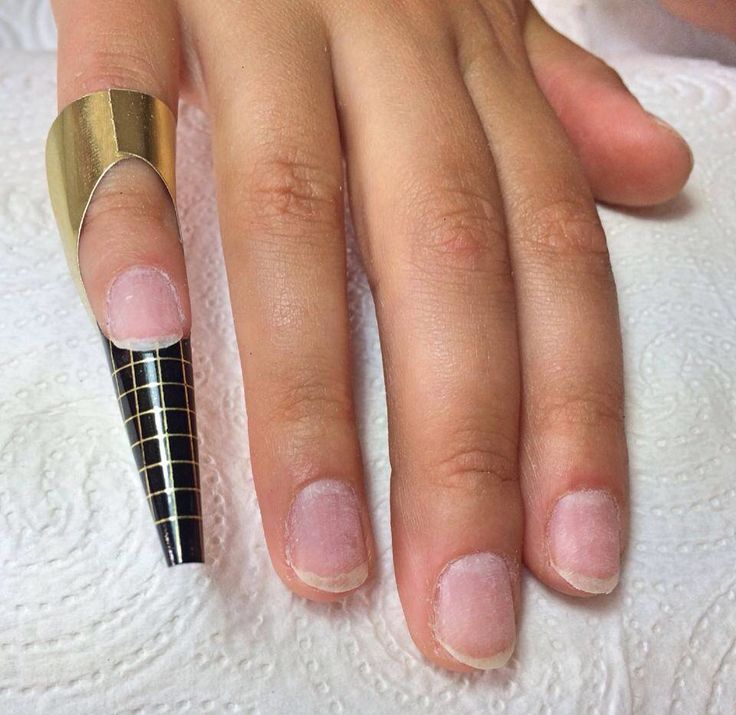
Cartina

Questo metodo è il più utilizzato perché si può ottenere sia un risultato molto naturale, ma anche estremo, ricostruendo le forme estreme.

Con la cartina si ottiene tramite il giusto posizionamento della cartina e tramite la pinzatura, un ottima curva a c.

Questa ricostruzione richiede un po’ di tempo per l’adattamento delle cartine alle 10 unghie, ma comunque i risultati ottenuti sono molto belli.
Tip

Questa ricostruzione è un po’ più veloce di quella con le cartine perché una volta trovata la corretta tip che si adatta all’unghia basta incollarla e si può procedere creando la struttura

Il rischio è quello di sbagliare la misura della tip.

Se si sceglie troppo piccola non comprenderà i laterali, se invece è troppo grande risulta sproporzionata sull’unghia.

Comunque con le tip, che sono di un materiale plastico, non ai può pinzare, si rischia di creare una piega o danneggiare la tip, quindi il risultato sarà un po’ meno naturale

Inoltre forme come mandorla, rotonda, ovale si possono ottenere da una tip quadrata però i laterali verranno eliminati compromettendo la struttura dell’unghia

Volendo si possono comprare le tip già con la forma.

Dual Form

Questa tecnica è piuttosto recente.

Si usa una sorta di tip inversa dove si applica il polygel.

Dopo di che si mette questa tip sull’unghia e in teoria si ha la struttura già pronta Basterebbe rifinire la forma e stendere il colore.

Il problema è trovare delle dual form di qualità.

Ce ne sono alcune troppo curvate verso il basso, altre troppo dritte e quindi la struttura risulterà sbilanciata.

E anche qui è importante scegliere la giusta misura, sennò l’unghia risulterà troppo artificiale.

Comunque nel caso in cui si abbiano ottime dual form e ottimo acrygel questo procedimento è molto più rapido rispetto agli altri.

Tip intera

Questo procedimento è abbastanza simile a quello di prima.

Bisogna trovare delle tip di qualità, possibilmente con una bella curva a c, e solubili nel remover,in modo da dover evitare di limare fino all’unghia naturale.

Si opacizza l’interno della tip, ai applica del gel costruttore e si preme dall’alto al basso la tip sull’unghia, in modo da far scorrere tutto il prodotto sulla lamina. Stringendolo si va a catalizzare in lampada.

Anche questo metodo è molto veloce perché non c’è bisogno di creare la struttura.

Però bisogna trovare delle tip adatte, che abbiano una curvatura tale che si crei autonomamente una bombatura.

Vi lascio il link di un video dove le uso.

Fibre di vetro

Le fibre di vetro sono del materiale sottile ma molto resistente.

Si applicano sul margine libero dell’unghia e le si ricoprono con il gel costruttore

Bisogna prestare bene attenzione a posizionarle bene sui laterali sennò si compromette la struttura.

Anche queste permettono un’ottima pinzatura e curva a c.

Una volta creato l’allungamento si crea la struttura.

Queste fibre possono essere usate per eseguire piccole riparazioni, come i fogli di seta che si usano con lo stesso procedimento.

Dip powder

Questa è una polvere acrilica, spesso usata per le coperture ma ho visto anche ricostruzioni con questo metodo.

Si applica una tip, invece del gel o acrilico si usa questa polvere e una colla speciale tra ogni strato.

Infine un attivatore che indurisce la polvere e ti permette di limarla.

Questo metodo secondo me è più macchinoso e richiede un po’ più di tempo,, inoltre la struttura creata non è delle ottimali.

Senza cartina

Questo metodo si utilizza soprattutto su chi ha le unghie cortissime, tipo le onicofagiche.

Con un prodotto piuttosto rigido come Acrygel o acrilico, si ricrea un minimo di lunghezza, giusto fino al polpastrello.

Quando poi l’unghia sarà abbastanza lunga allora si potrà scegliere uno dei metodi a mostra scelta.

Questi sono i principali metodi di ricostruzione che esistono.

Voi quale preferite?

Se questo articolo Vi è piaciuto lasciate like e condividete.

Non dimenticatevi di seguirmi su Instagram e sul mio canale youtube.

Alla prossima!

SOFIA

Difference between various reconstruction methods

Welcome back to my blog!

Today I want to talk to you about the various methods that exist to reconstruct the nails and the differences between them.

Let’s start!

Nail form

This method is the most used because it is possible to obtain both a very natural result, but also an extreme one, by reconstructing the extreme forms.

With the nail form you get, through the correct positioning of it and through the pinching, an excellent c-curve.

This reconstruction takes some time to adapt the nail forms to the 10 nails, but in any case the results obtained are very beautiful.

Tip

This reconstruction is a little faster than the one with the nail form because once you have found the correct tip that fits the nail just glue it and you can proceed creating the structure

The risk is to miss the tip size.

If you choose too small it will not include the sidewalls, if it is too large it is disproportionate on the nail.

However with the tips, which are of a plastic material, it cannot pinch it, you risk creating a crease or damaging the tip, so the result will be a little less natural.

In addition, shapes such as almond, round, oval can be obtained from a square tip, however the sides will be eliminated by compromising the structure of the nail

If you want you can buy the tips already with the form.

Dual Form

This technique is quite recent.

A sort of inverse tip is used where polygel is applied.

After which you put this tip on the nail and in theory you have the structure ready. It would be enough to refine the shape and apply the color.

The problem is finding quality dual forms.

There are some too curved downwards, others too straight and therefore the structure will be unbalanced.

And here too it is important to choose the right size, otherwise the nail will be too artificial.

However, if you have excellent dual forms and excellent acrygel, this procedure is much faster than the others.

Full tip

This process is quite similar to the previous one.

You need to find quality tips, possibly with a nice c-curve, and soluble in the remover, so you have to avoid filing up to your natural nail.

You have to opaque the inside of the tip, the builder gel is applied and the tip is pressed from top to bottom, so that all the product flows on the nail plate. You cure it, holding the tip in place.

This method is also very fast because there is no need to create the structure.

But you need to find suitable tips that have such a curvature that you can create a camber yourself.

Fiberglass

Glass fibers are thin but very resistant material.

They are applied on the free edge of the nail and covered with the builder gel

Care must be taken to position them well on the sides, otherwise the structure will be compromised.

These also allow for excellent pinching and c-curves.

Once the extension is created, the structure is created.

These fibers can be used for minor repairs, such as silk sheets that are used in the same way.

Dip powder

This is an acrylic powder, often used for coating but I have also seen reconstructions with this method.

A tip is applied, instead of the gel or acrylic this powder is used and a special glue between each layer.

Finally an activator that hardens the powder and allows you to file it.

In my opinion, this method is more slow and takes a little more time, moreover the structure created is not optimal.

Without nail form

This method is mainly used on those with very short nails, such as onychophages.

With a rather rigid product such as Acrygel or acrylic, a minimum length is recreated, right down to the fingertip.

When the nail is long enough then you can choose one of the chosen show methods.

These are the main reconstruction methods that exist.

Which one do you prefer?

If you liked this article, leave it like and share.

Don’t forget to follow me on Instagram and on my youtube channel.

See you next time!

SOFIA

Prime impressioni sul polygel!

Bentornati sul mio blog!

Se vi ricordate, ho già parlato di questo prodotto in questo articolo che vi lascio qui.

Spiegavo come secondo me, utilizzato con le dual form, non andasse molto bene il risultato.

Ho deciso così di acquistare il poligel per provarlo, e in questo articolo ve ne parlerò.

Iniziamo!

Poligel con cartina

Facilità di lavorazione

Se si è abituati al gel, la formulazione di questo prodotto potrà sembrare inizialmente strana.

Per lavorarlo abbiamo bisogno di un pennello piatto e di una soluzione, in modo che il pennello non si appiccichi al prodotto.

La sua consistenza è molto densa e non cola, abbiamo quindi tutto il tempo di lavorarlo, senza avere paura che coli, andando a finire sulla pelle e rovinando l’ipotetica ricostruzione.

Si può lavorare con Calma

Quindi grazie alla sua densità, possiamo prenderci tutto il tempo per modellarlo, fare tutte le dita assieme, senza aver timore che a causa della densità possa scivolare dove non vogliamo.

Questo prodotto è molto indicato per fare il muretto del french profondo e inverso.

Volendo, con un po’ di manualità, si potrebbe lavorare già quasi alla perfezione, senza poi dover limare la struttura in seguito.

Non brucia

Nonostante io abbia applicato abbastanza prodotto, questo non ha mai scottato minimamente.

C’è da dire che ciò è soggettivo e dipende anche dai prodotti usati, però nel mio caso non ho avvertito calore.

Più duro da limare

Ho notato durante la fase di limatura che è più duro rispetto al gel.

Inizialmente per limare la superficie utilizzavo una punta della fresa blu, a grana media, ma la punta è come se si inceppasse e non ruotasse bene.

Allora ho cambiato grana, passando ad una punta verde, molto più abrasiva e non ho avuto problemi.

Promuovo dunque questo materiale abbinato all’utilizzo della cartina, per i motivi riportati qui sopra.

Poligel con Dual Form

Come dicevo nel mio articolo precedente, non ero molto convinta riguardo all’utilizzo della dual form.

Ho comunque deciso di provare.

Il risultato come vedrete non è bello.

Difficoltà scelta tip

Tra tutte le tip che avevo a disposizione, avevo difficoltà nel sceglierne una. O erano troppo grandi o troppo piccole.

Comunque tutte in generale non riuscivano bene a comprendere i laterali della mia unghia.

Una volta che ho scelto quella che mi sembrava la più adatta, ho iniziato ad applicare il prodotto all’interno di essa.

Devo dire che fare ciò è piacevole e anche divertente.

Posizionamento della dual form

Dopo aver steso bene tutto il prodotto, dovevo appoggiare la tip sulla mia unghia.

Non riuscivo a posizionarla bene.

Se la premevo un po’ troppo fuoriusciva il prodotto, se non la premevo andava verso l’alto.

Insomma ho impiegato parecchio tempo a capire come applicarla.

Ho polimerizzato e rimosso la tip di plastica.

Limatura

In teoria come sappiamo, questo metodo dovrebbe essere facile e veloce, si dovrebbe pur fare a casa, senza troppe difficoltà.

Una volta rimossa la plastica, l’unghia aveva un aspetto poco bello.

Prima di tutto mancavano i laterali, cosa importantissima in una ricostruzione.

Poi, non so se sono stata io incapace a posizionare bene la dual form, però la bombatura non risulta essere nella posizione corretta.

L’unghia è piatta, senza curva a c ed è presente sotto l’unghia troppo prodotto.

Se una persona non ha una fresa a casa, come fa a rimuoverlo e rendere migliore la forma?

Forse sono io che non sono capace ad utilizzare questo metodo, però ci ho messo meno tempo a ricostruire con la cartina, piuttosto che fare tutto questo procedimento.

Per la mia opinione, questo metodo non è valido se si vogliono ottenere dei bei lavori.

Riproverò in futuro a rieseguire questo procedimento, se otterrò risultati migliori ve lo farò sapere, però continuerò ad utilizzare le cartine per ricostruire.

In questo articolo ho parlato molto ma volevo esprimere bene tutte le mie impressioni.

Ovviamente ho realizzato un video dove mostro tutto ciò, vi lascio qui il link!

Spero che questo articolo vi sia piaciuto, fatemi sapere voi cosa ne pensate dei miei risultati e di questo materiale.

Non dimenticatevi di seguirmi su Instagram e sul mio canale YouTube!

Alla prossima!

SOFIA

First impressions about polygel!

Welcome back to my blog!

If you remember, I have already talked about this product in this article that I leave you here.

I explained how, in my opinion, used with dual forms, the result was not very good.

So I decided to buy polygel to try it, and in this article I’ll talk about it.

Let’s start!

Poligel with nail form

Easy process

If you are used to the gel, the formulation of this product may seem initially strange.

To work it we need a flat brush and a solution, so that the brush does not stick to the product.

Its consistency is very dense and does not drip, so we have plenty of time to work it, without being afraid of it ending up on the skin and ruining the hypothetical reconstruction.

You can work it with Calm

So thanks to its density, we can take all the time to shape it, do all the fingers together, without fear that due to denisity it can slip where we don’t want it.

This product is very suitable for making the deep and inverse french wall.

With a little manual work, you could already work almost to perfection, without having to file the structure later.

No heat

Although I have applied enough product, this has never burned at all.

It must be said that this is subjective and also depends on the products used, but in my case I did not feel heat.

Harder to file

I noticed during the filing phase that it is harder than the gel.

Initially I used a medium-grain blue drill bit to file the surface, but the tip wasn’t rotating well.

Then I changed the grain, switching to a green, much more abrasive and I had no problems.

I therefore promote this material combined with the use of the nail forms, for the reasons shown above.

Poligel with Dual Form

As I said in my previous article, I was not very convinced about the use of dual form.

I still decided to try.

The result as you will see is not beautiful.

Difficulty about the size of the tip

Of all the tips I had available, I had difficulty choosing one. Either they were too big or too small.

However all in general they were not well able to inglobe the sidewalls of my fingernail.

Once I chose the one that seemed the most suitable, I started to apply the product inside it.

I must say that doing this is pleasant and even funny.

Positioning of the dual form

After putting the whole product well, I had to place the tip on my nail.

I couldn’t place it well.

If I pressed it a little too far, the product would come out, if I didn’t press it it would go upwards.

In short, it took me a long time to understand how to apply it.

I polymerized and removed the plastic tip.

Filing

In theory as we know, this method should be easy and fast, you should still do it at home, without too much difficulty.

Once the plastic was removed, the nail looked unattractive.

First of all, there were no sides, which is very important in a reconstruction.

Then, I don’t know if I was unable to position the dual form well, but the apex does not appear to be in the correct position.

The nail is flat, without a c-curve and is present too much product under the nail.

If a person does not have ane-file at home, how can he remove it and make the shape better?

Perhaps it is I who am not able to use this method, but it took me less time to reconstruct with the nail form, rather than doing all this procedure.

In my opinion, this method is not valid if you want to get good jobs.

I will try again in the future to re-execute this procedure, if I get better results I will let you know, but I will continue to use nail forms to rebuild.

In this article I talked a lot but I wanted to express well all my impressions.

Obviously I made a video where I show all this, I leave the link here!

I hope you enjoyed this article, let me know what you think of my results and this material.

Don’t forget to follow me on Instagram and on my YouTube channel!

See you soon!

SOFIA